
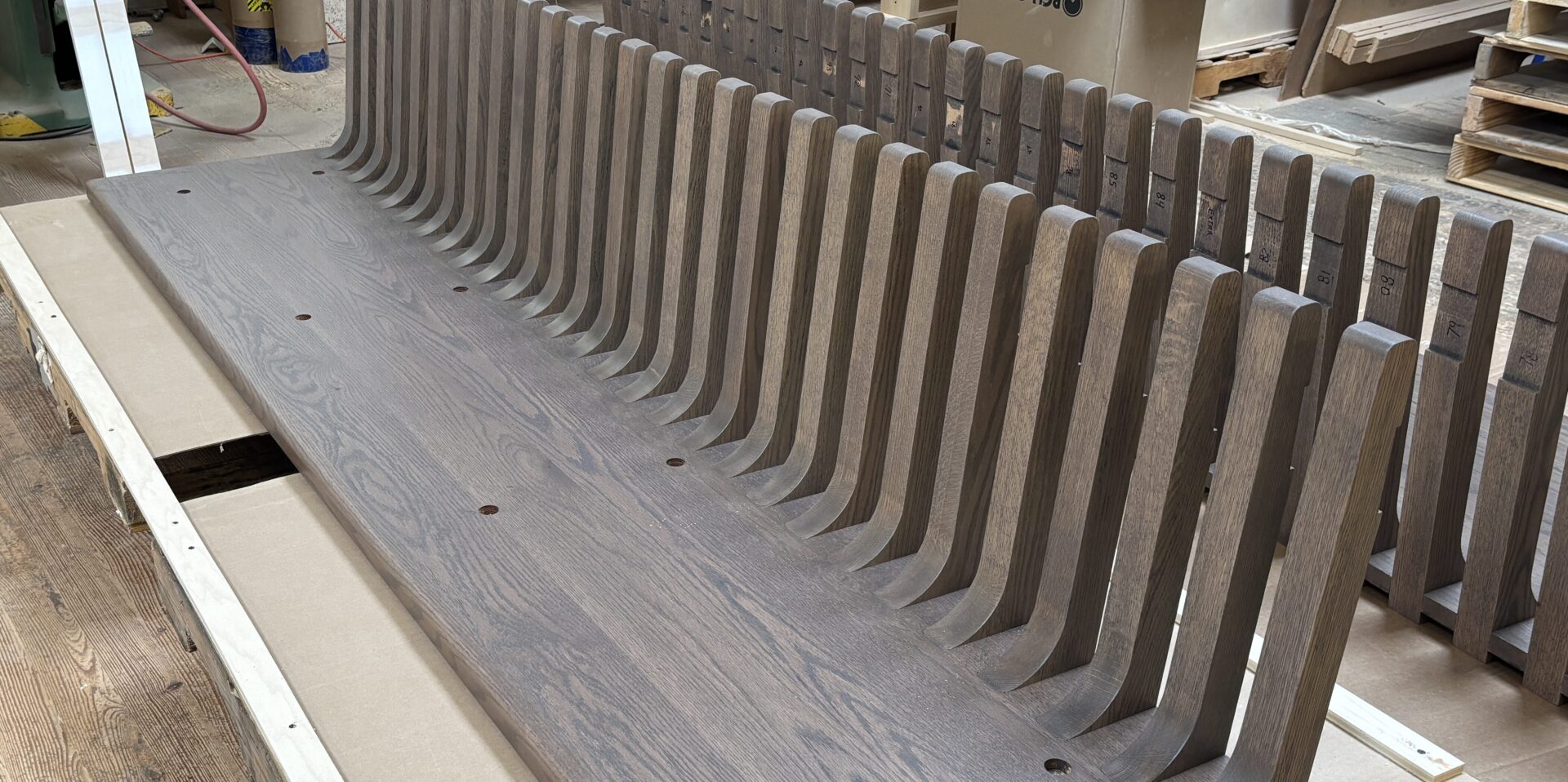
For the past few years, white oak has become the most popular species in the contemporary design space, architects and designers have been specifying white oak for cabinetry, wall cladding, and box beams. More specifically the fine, straight grain of a rift sawn White Oak. Red Oak has become the ugly duckling that no one is even considering and we think that is a short sighted viewpoint. Red Oak can achieve much of the same style as White Oak with the proper treatments. Maybe we can’t exactly replicate it but unless you put them side by side, the design intent is still there with either species. Market trends in oak lately strongly favor specifically rift white oak but red oak log prices show strong infrastructure support that pose a strong opportunity to use red oak more often. Using Red Oak over White Oak could be more available, less expensive and frankly, a more sustainable choice from a supply chain perspective. All this and you maintain your design intent.
Why Red Oak isn’t popular
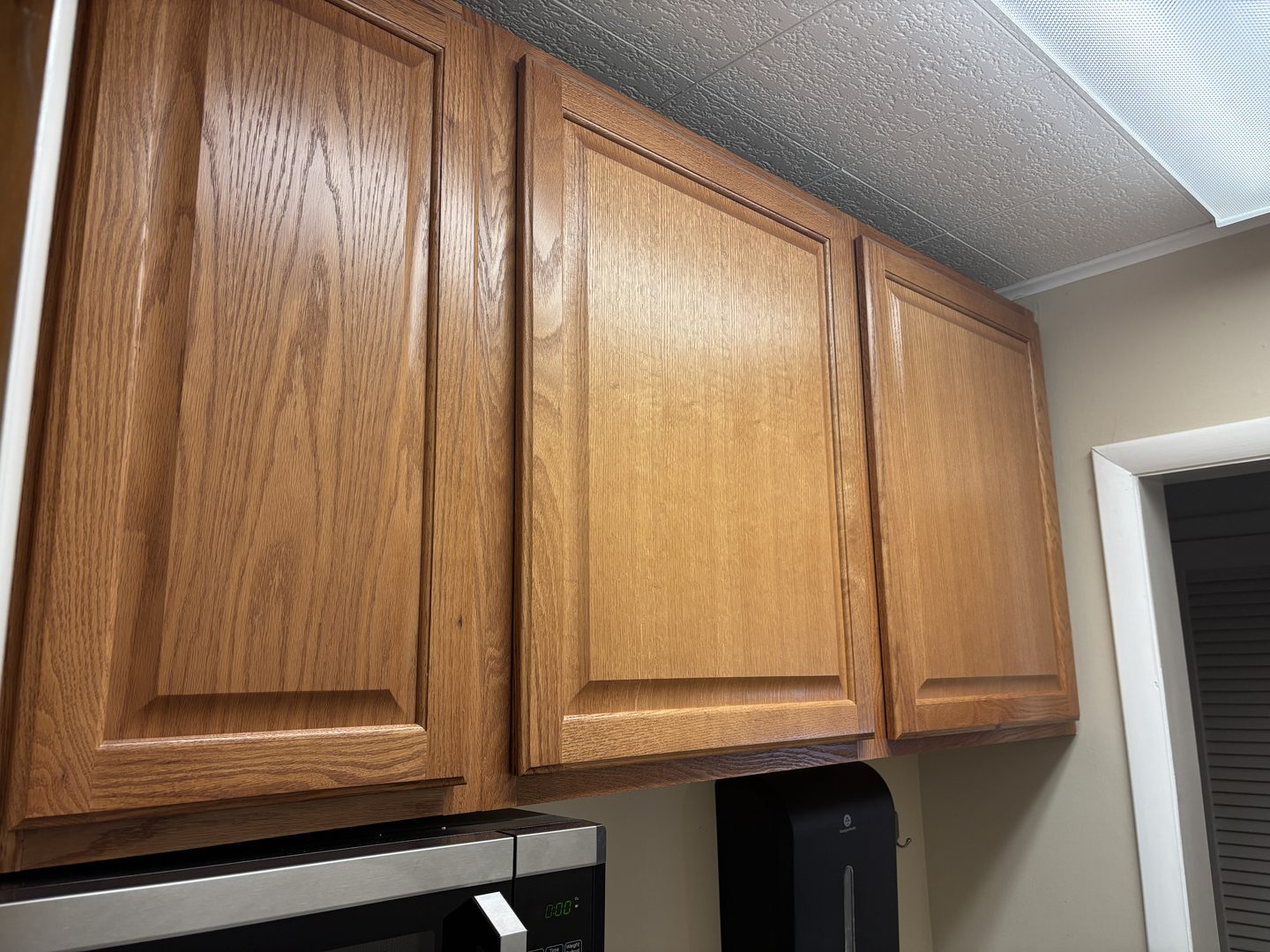
Part of red oak’s fall from grace has to do with its own success in the 20th century. Every millennial can probably attest to their grandparents having red oak cabinets in their house (like the ones below). Let’s not even talk about the forests of clunky Red Oak funiture with brass accents and router cut outs. As a result, red oak is often perceived as old-fashioned, while white oak is more commonly associated with contemporary design and luxury.
Comparing the looks
Most people have a hard time distinguishing between the oaks. Ask 6 people and you will get 6 answers on how they tell them apart. Some say color, others focus on grain, some even go by smell. They are all right…and wrong. But freshly milled wood is not what a wood species actually looks like. So it is even more difficult with red oak vs white oak once they have oxidized.

When red oak is freshly surfaced, a pink undertone is present. Over time, exposure to sunlight and oxygen causes the wood to oxidize, gradually mellowing the pink undertone and leaving behind a color that is remarkably similar to white oak. Below we have a gif showing the slow transition of a fresh red oak board oxidizing. This process took place over one day. The regional origin of both Red and White oak factors heavily into this as well. Some white oak looks like red and vice versa just depending on where it grew.
Money Talks: Red Oak is sometimes half the cost
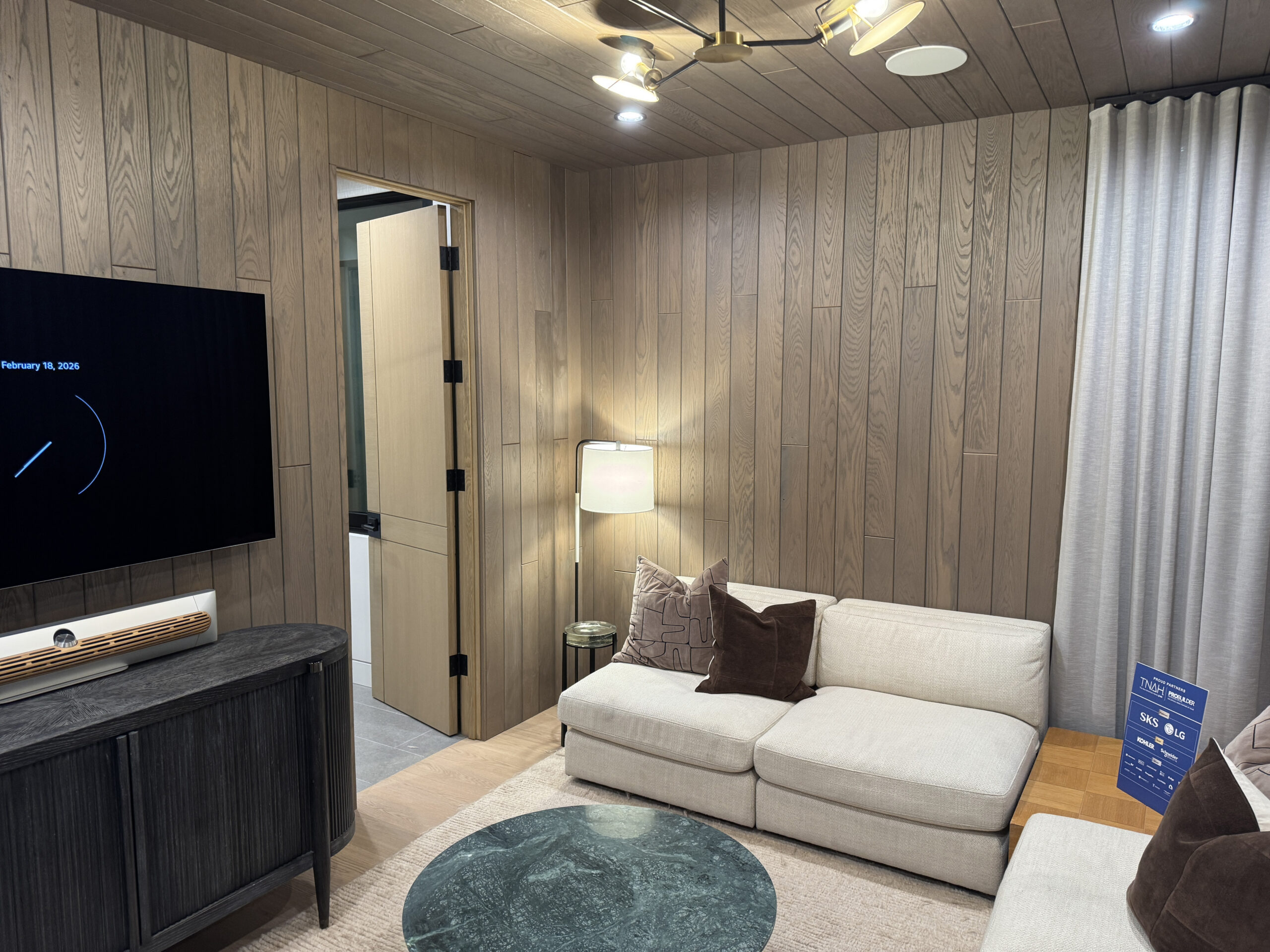
This image was taken during a visit to the New American Home at IBS in Orlando. The room features factory-finished white oak cladding that we supplied for the project. What we can tell you is this room ran around $8,000 in materials and finishing. If this material was red oak instead, we expect the cost to drop by about 50%.
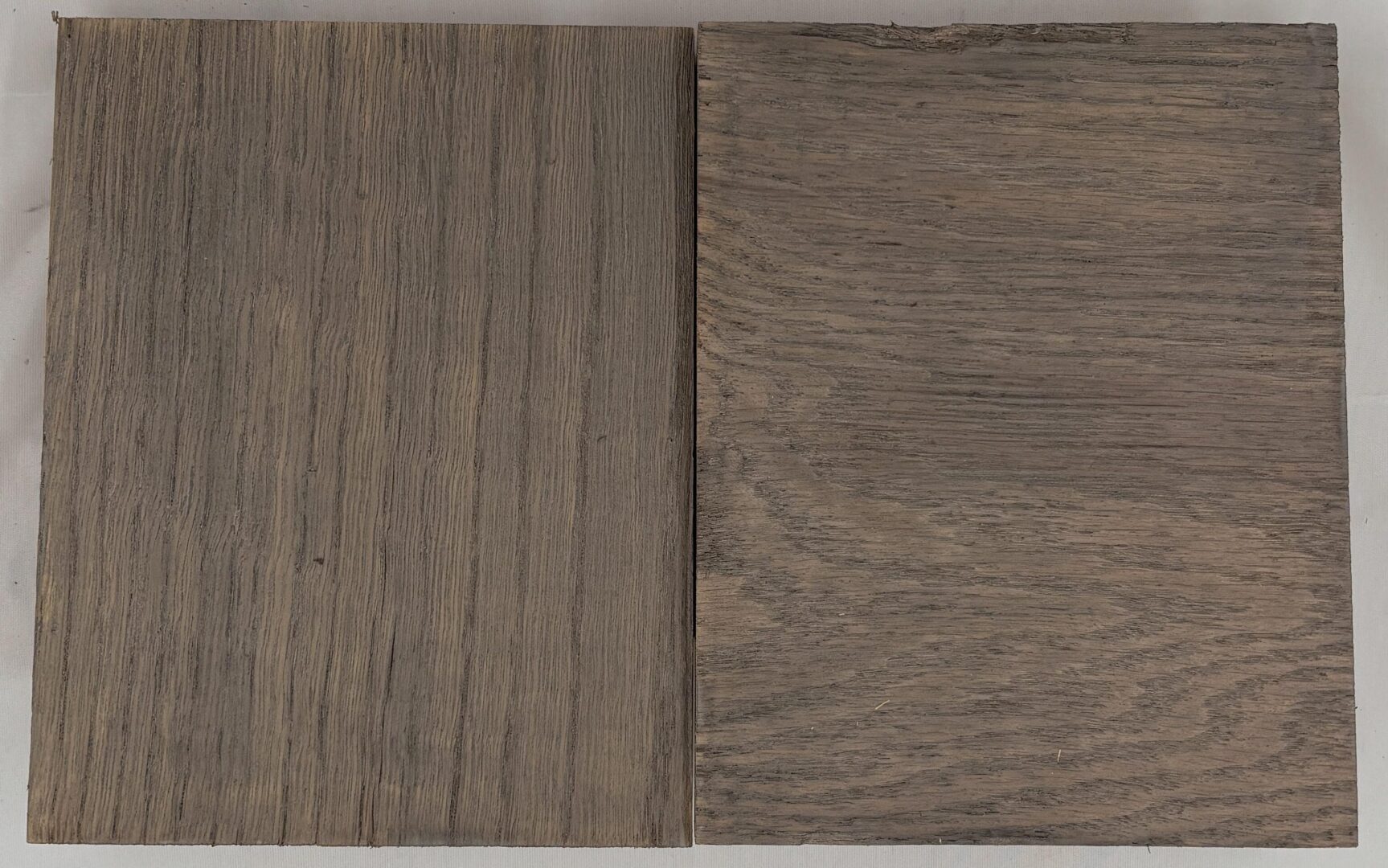
So, if you have an interior design that heavily uses white oak, instead consider red oak which gives you 90% of the look for 50% of the price. Above is a comparison of both species with the same finish from the New America Home project featured at IBS.
Can you tell which of the pictured boards is the white oak and which is the red oak?
Finish is the Secret WEapon for Unifying white oak and red oak
We can pick and choose grains and let the wood oxidize to match but the finished product will always have some kind of finish on it. This is where the real magic happens in matching the two species. Keep in mind for the examples we give below that we are NOT suggesting you mix the species in the same project. Not unless you paint the wood fully opaque (please don’t) will everything exactly match. While we show side by side comparisons below this is not the goal for that feature wall or flooring job.
Whitewashed Oak comparison
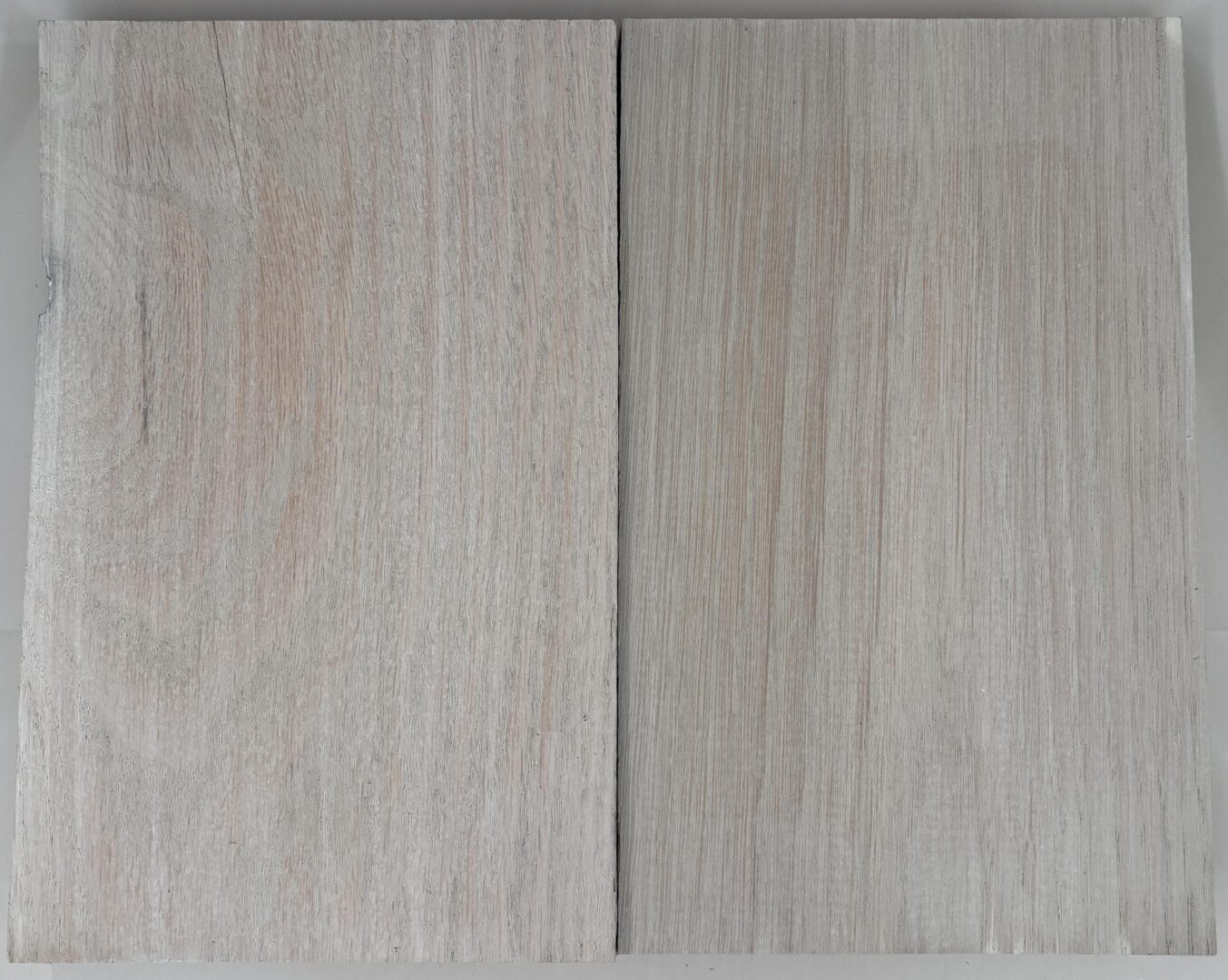
The previous comparison used a semi-translucent finish, which can help mask some of the natural color differences between the species. But how do they compare when using a more translucent finish with added pigment? Above is a comparison of both species finished with a whitewash. The chic term for this would be a “cerused” or “pickled” finish. To a trained eye, the differences are noticeable. However, to most people, the distinction is negligible.
Clear coat comparison
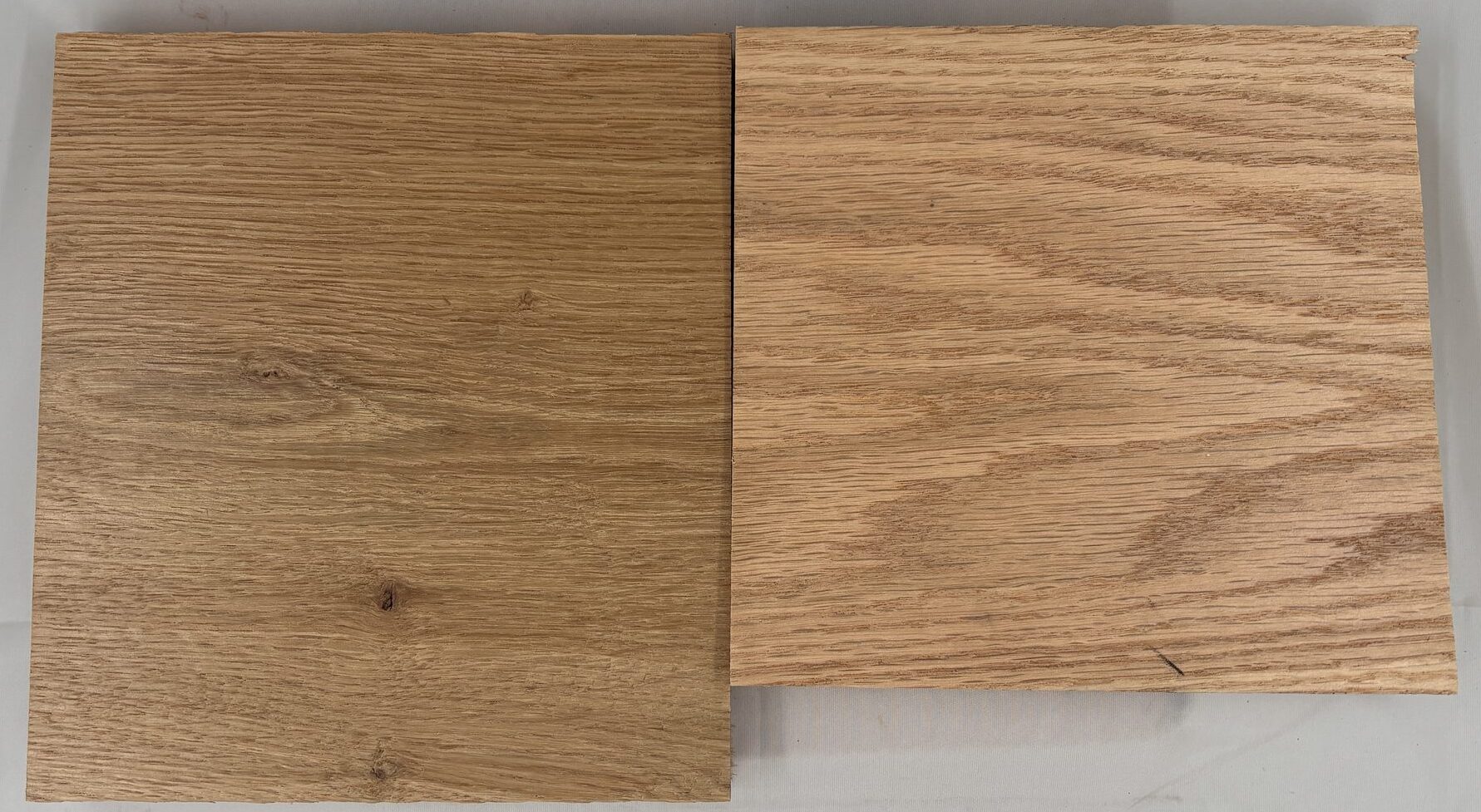
Finally, let’s see how red oak and white oak compare under a clear coat finish. Here the difference in color and grain is more apparent. But side by side in this case will always showcase the differences. As state above, we aren’t suggesting mixing the species on a project.
So let’s put this in context. Below we used AI to clad the walls of the same New American Home room we showcased above. The difference is apparent when they are right next to each other, but when you do the whole wall in one species the look isn’t as drastic.


There are certainly situations where white oak remains the better choice, and we are not suggesting that red oak can replace white oak in every application (especially for exterior applications). However, for interior applications where an “oak look” is desired and budget matters, red oak is a compelling alternative worth considering.
can red oak look like white oak?
Yes. When using semi-opaque finishes such as the dark and whitewashed examples above, red oak takes on an appearance that is remarkably similar to white oak. In many cases, unless the two are placed side by side, most people would not notice the difference. This becomes even more true as the wood ages and the pink undertones commonly associated with red oak begin to mellow. If your design intent is the look and character of white oak, but the budget makes white oak difficult to justify, red oak can be a compelling alternative that delivers a similar aesthetic at a significantly lower cost.
We’d be happy to discuss whether red oak is the right fit for your project. Reach out to our team to learn more.







Leave a Reply