
What is Vulcan?
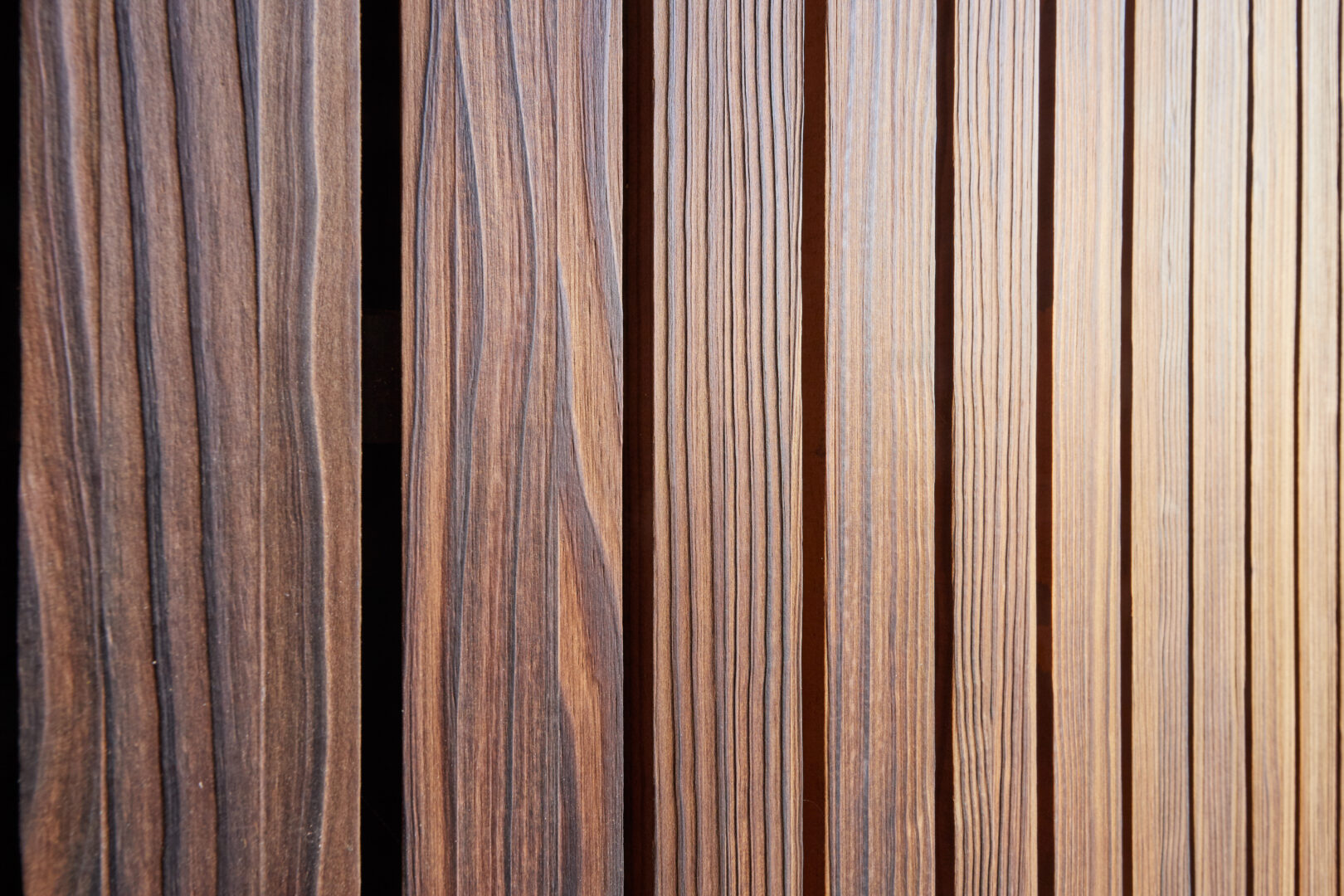
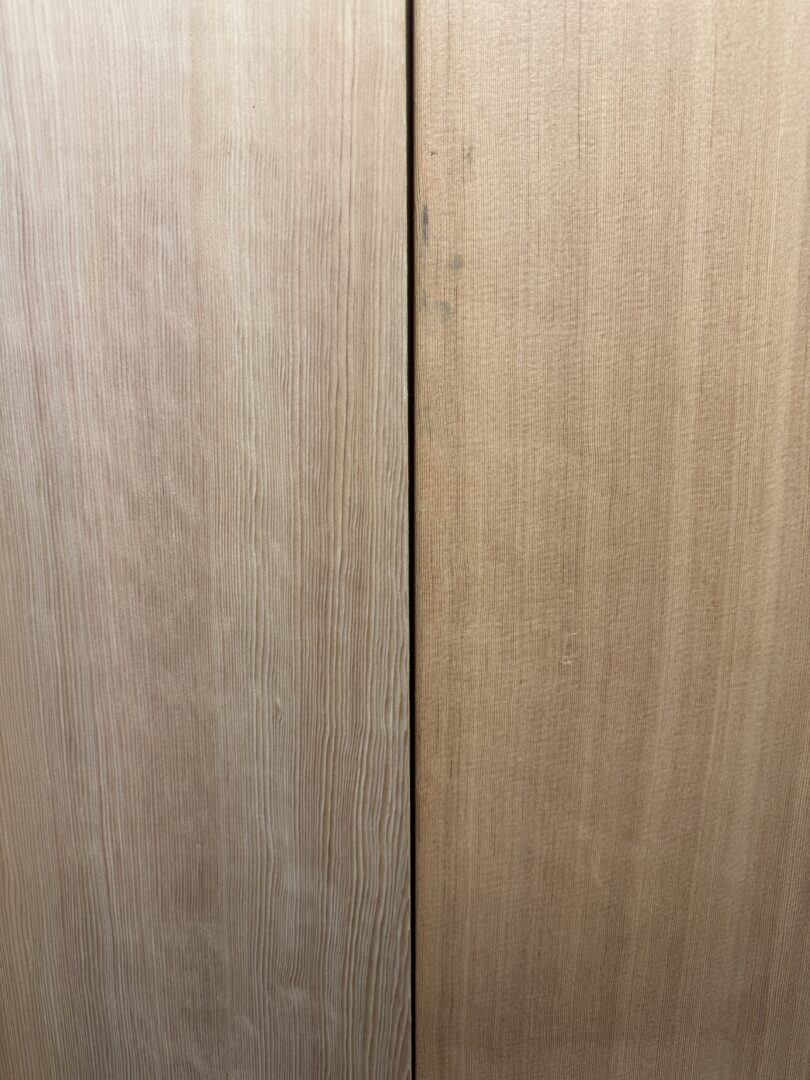
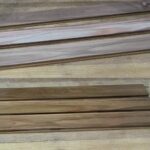
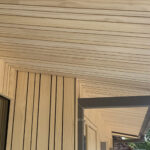
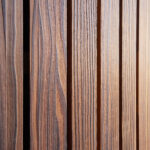
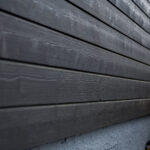
Vulcan is Abodo’s method for taking flatsawn Radiata pine boards and modifying them to replicate the look and performance of clear vertical-grain (CVG) boards. Today CVG Fir, Spruce, and Cedar are harvested for that tight growth ring look. 100+ year old “Old growth” or “1st Growth” trees may have upwards of 30-50 growth rings per inch. 2nd and 3rd growth trees might yield 10-15 growth rings per inch or even lower. These boards are truly beautiful, but becoming more and more difficult to obtain. Not to mention the question of how sustainable the industry can be with a harvest rate of 80-100 years. Vulcan’s process can create a CVG look with a density of 5-7 growth rings per inch. Albeit wider, but unquestionably more sustainable.
Why is it important?
Part of Abodo’s mission is the protection of old-growth forests by creating a sustainable new growth forest supply chain, and Vulcan helps Abodo in accomplishing this mission. CVG boards are typically created by quarter-sawing old-growth forest logs. These boards are widely considered to be better looking, dimensionally stable, and stronger. The downside is quarter-sawing logs generally yields only about 45-55% of the log. So around half of that old-growth log goes to waste. Whereas flatsawn lumber theoretically can yield 100% of the tree (minus the bark etc). So ~2X increase in yield. Since Abodo vulcan is created using flatsawn boards and using a glue-up process to create these CVG boards, they hypothetically can create twice the amount of CVG boards per log.
Why Radiata Pine?
Abodo uses Radiata pine for a few reasons:
- Fast growing
- Easily accessible
- High Permeability
In contrast to hardwoods, softwoods grow stronger the faster they grow. This is because softwoods get their strength through the volume of latewood rather than the ring structure of hardwoods.
One of the things that makes Abodo stand out is its own on-site FSC-certified Radiata pine forest on site.
Finally, Radiata pine is known for its high permeability, meaning liquids and gases can move easily through its internal structure. This makes Radiata pine a great choice when it comes to modification (Thermal, chemical modification, etc).
How is Vulcan created?
To demonstrate the process, we will be using this piece of kiln-dried Poplar.
- Our first step was to plane the board to get it as flat as possible.
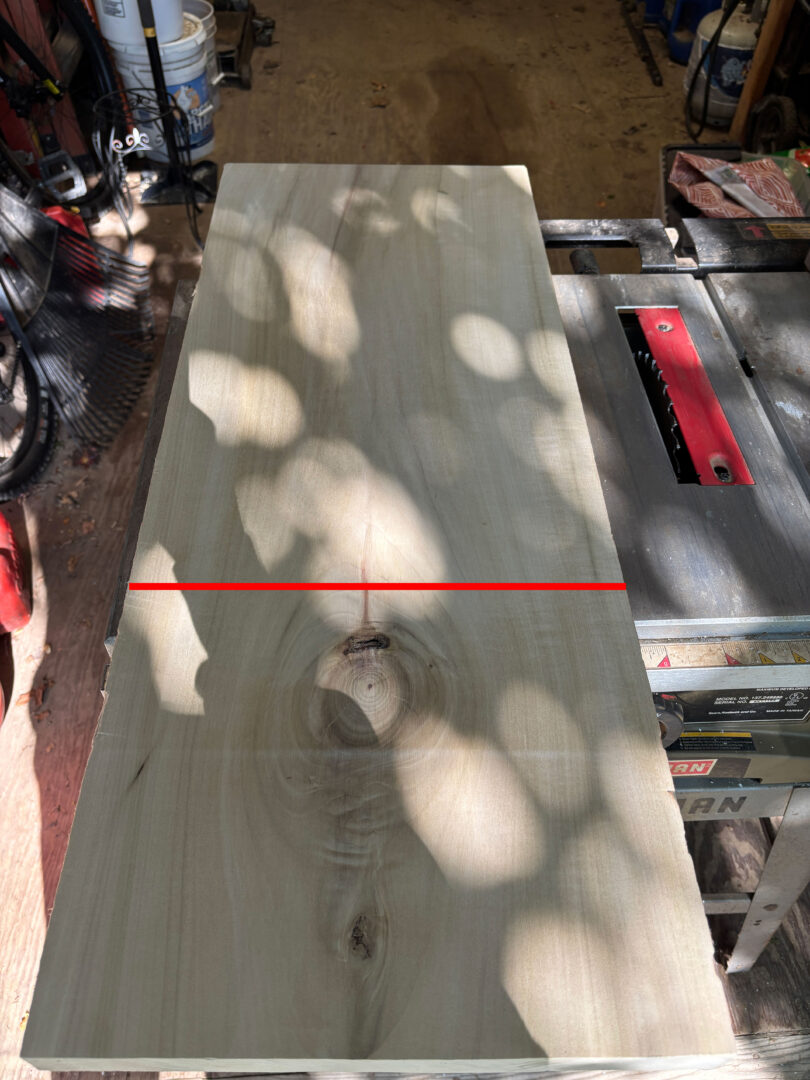
- Then we ripped the knot away from the board along the red line.
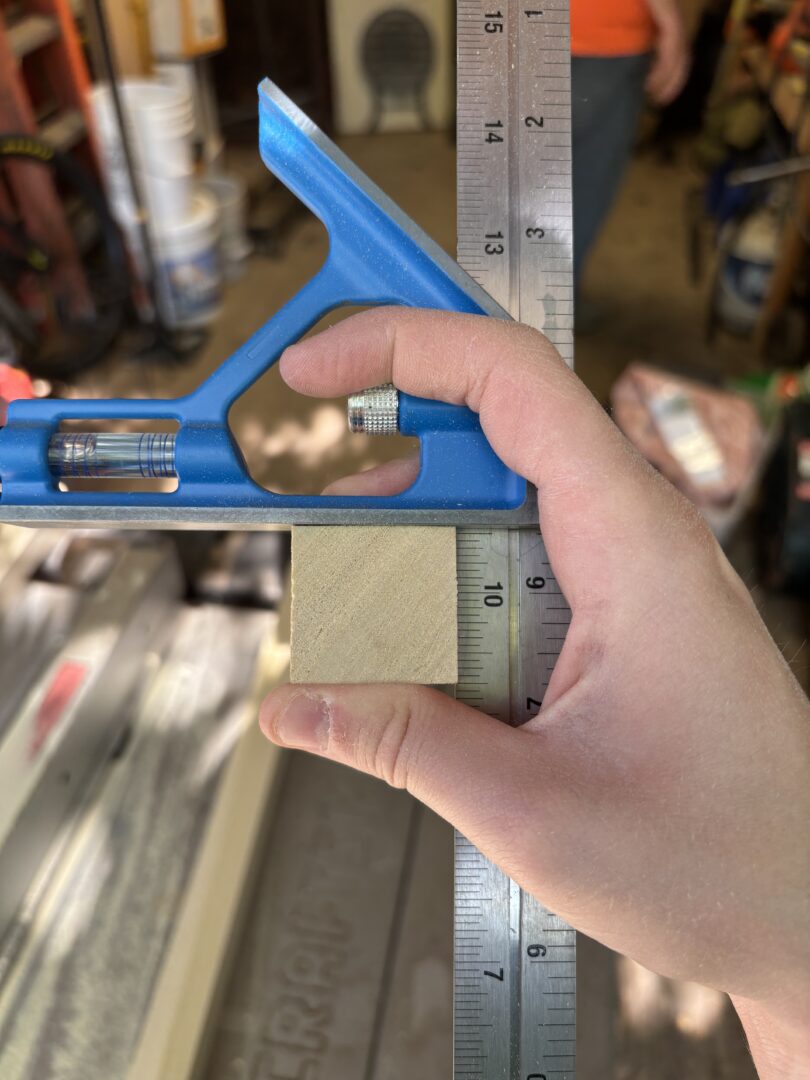
- Next, we cut the board into strips lengthwise. We figured the width of the strips by finding the thickness of the board
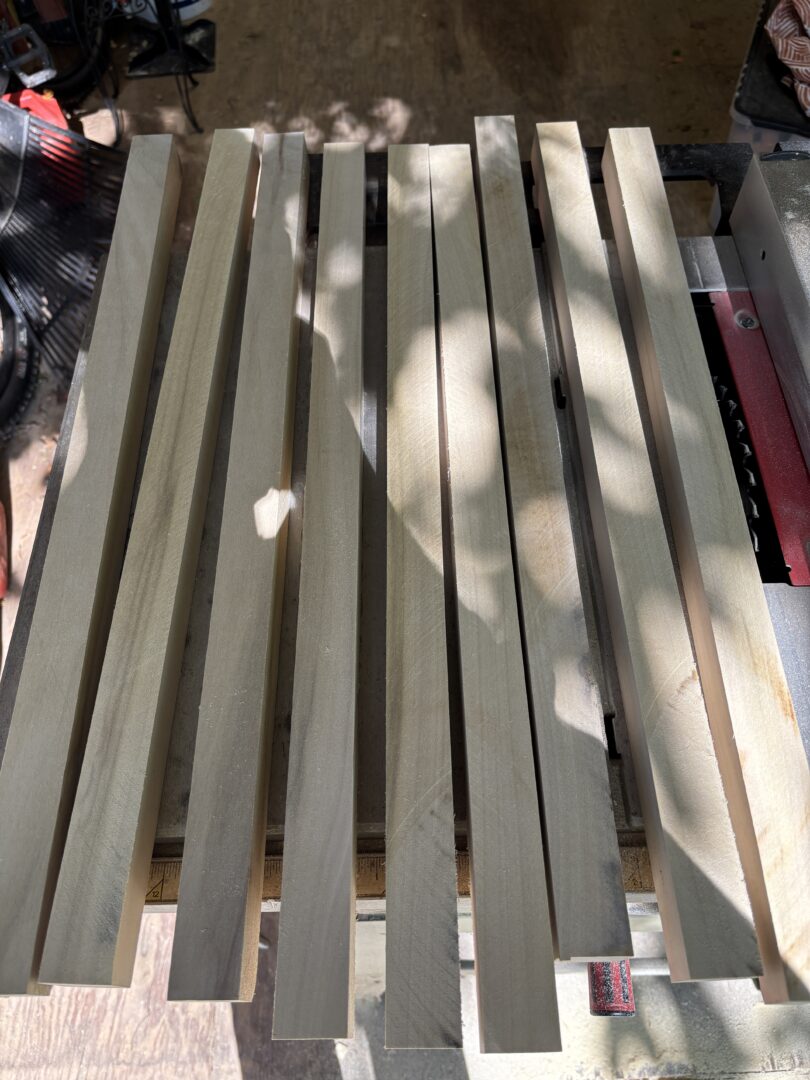
- Checking to make sure cuts are square
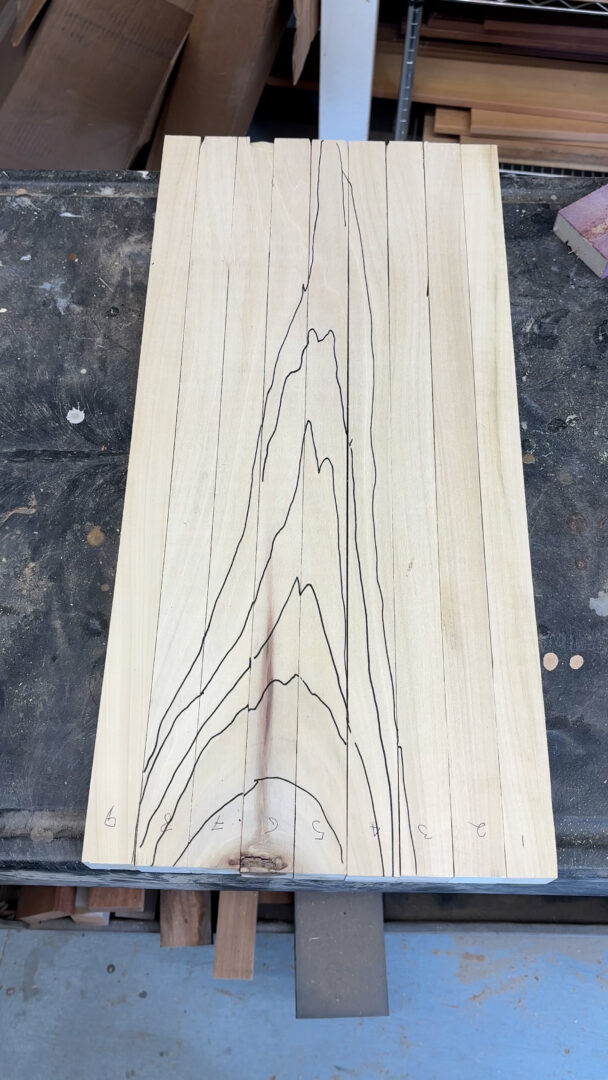
- Because poplar’s grain doesn’t stick out as well, we traced the flatsawn cathedral grain here to help visualize
- Now, if we flip each of these strips 90 degrees, you will reveal the CVG look. Again, we marked the board’s grain
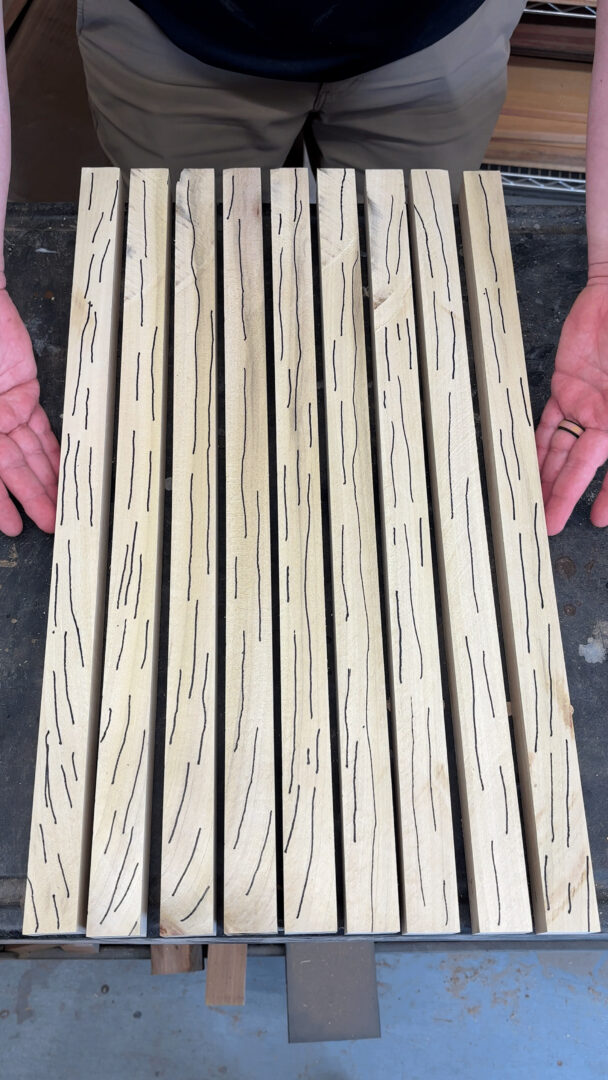
- We then glued the cathedral face side of the boards and clamped them together
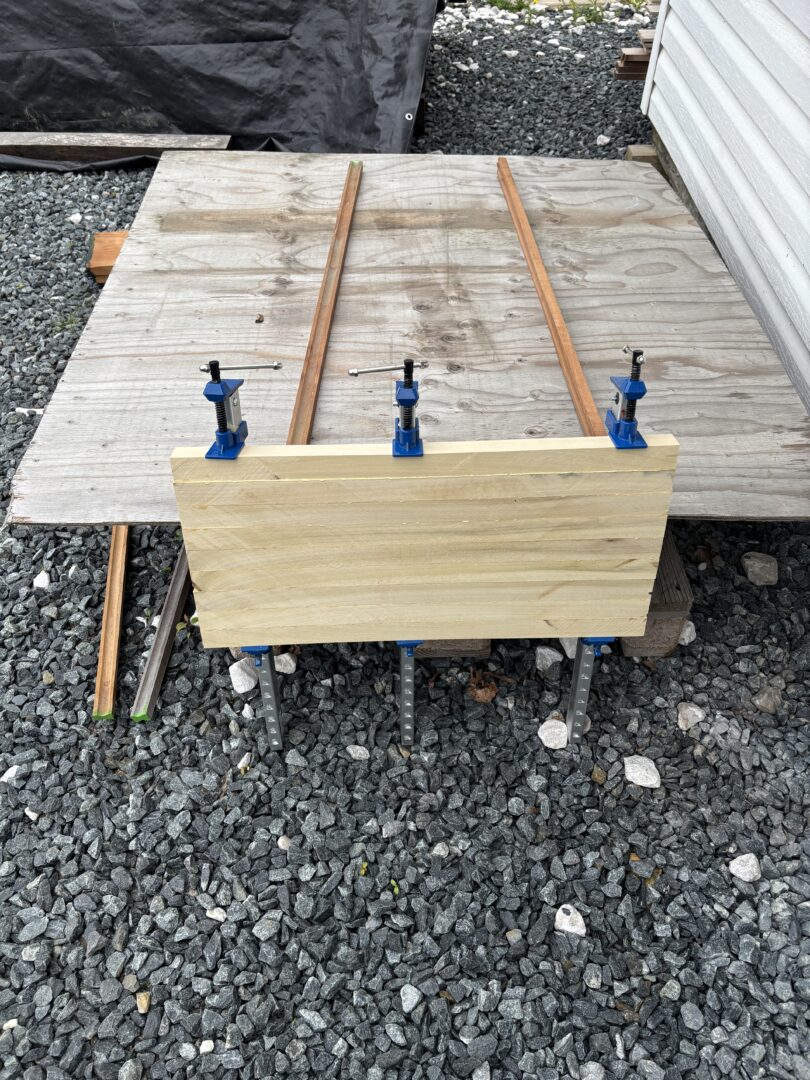
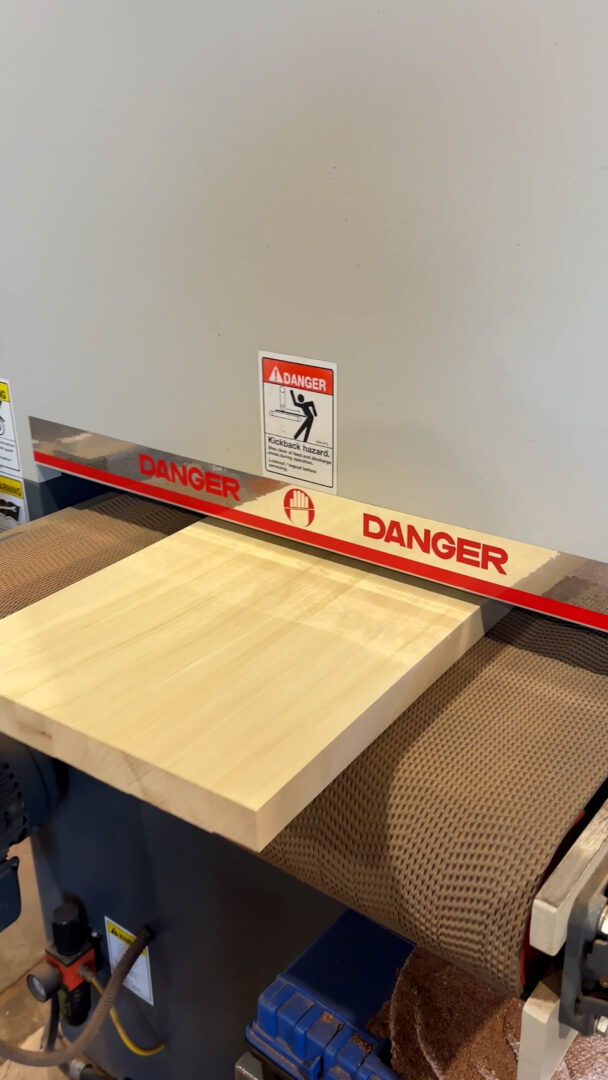
- After 24 hours, the clamps were removed, then we ran the slab through our belt sander. To flatten the board.
- Et voilà you now have a CVG board created from a flatsawn board.
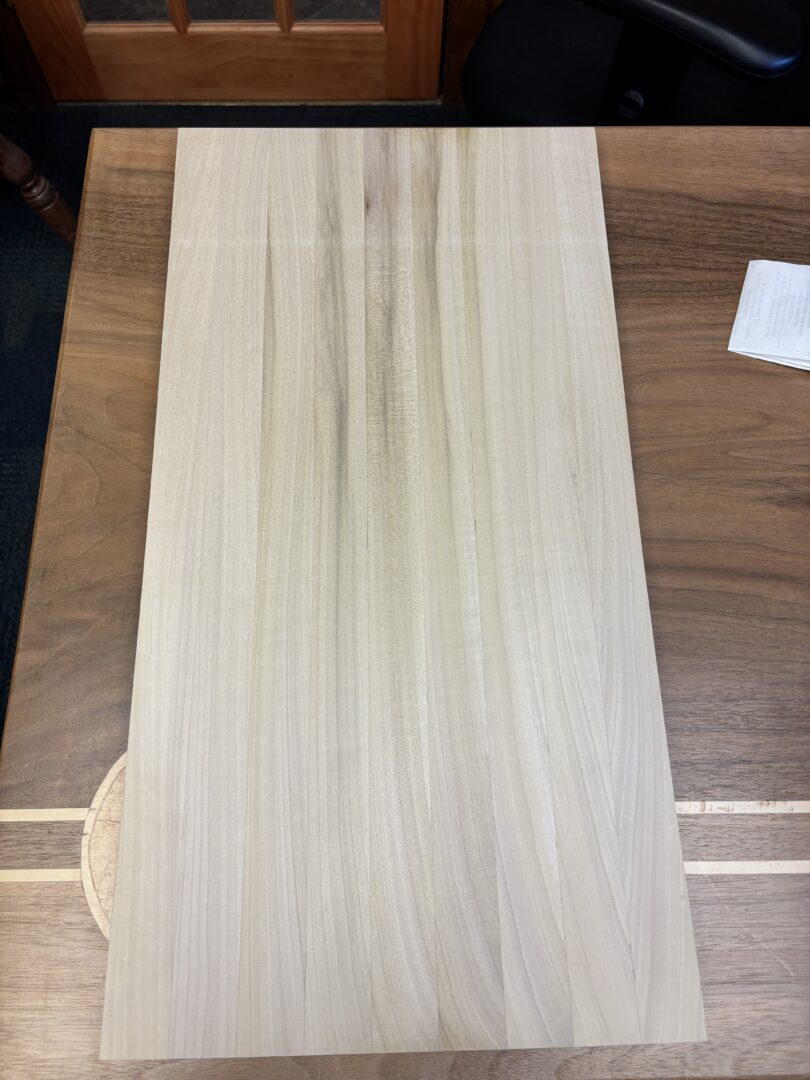
Besides improved visual appeal, you can expect this board to be more dimensionally stable and even stronger than it was before as a flatsawn board.
The example above is a textbook way of showing how this process is done. The reality is that Abodo is using the offcuts from its standard series boards to create these Vulcan CVG boards. Typically, sawmills will just throw these off-cuts away, further increasing the waste factor for these logs, but the Vulcan process allows Abodo to reclaim these boards and create a premium product that is not only structurally and visually better, but also more environmentally friendly as well.



Leave a Reply