
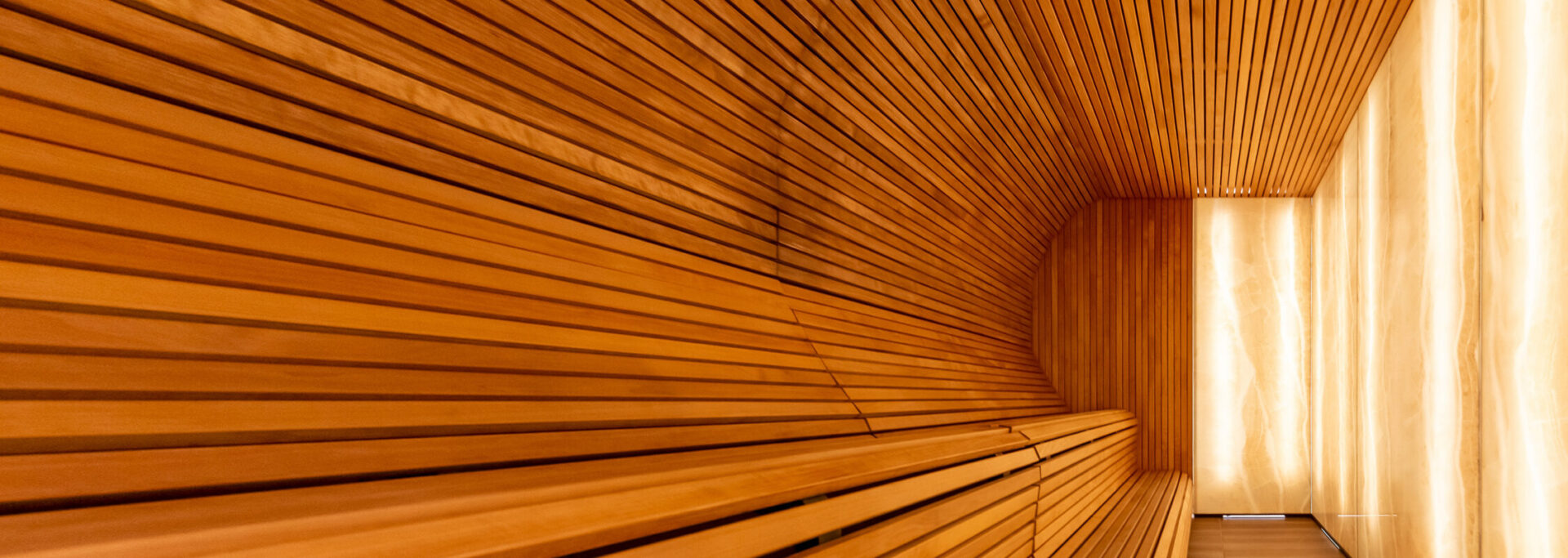
Why Material Choice matters in a sauna
When it comes to saunas—especially outdoor installations—the environment can be demanding on materials. Thermory saunas offer a lot of material options to combat these demands. Temperatures and humidity levels fluctuate significantly, often dramatically, during the winter months. On top of that, interior surfaces can become extremely hot to the touch, creating the potential for discomfort if the wrong materials are used.

If reading this makes you think, “Let’s just use thermally modified wood,” you’re on the right track. However, it’s important to understand that not all woods perform the same—thermally modified or not. Species selection, grain structure, density, and natural chemistry still play a critical role in how the material handles heat, moisture, and direct skin contact over time.
Let’s briefly go over everything you need for your sauna project
- Heating element. This (surprise surprise) is responsible for heating your sauna. There can be entire articles written on the various types of heaters and their advantages and disadvantages, but we won’t get into that in this article.
- Sauna door. There are a few options when it comes to doors. You can go with tempered glass or keep it traditional with a wooden door.
- Finally, most of your sauna will consist of some type of wood used for the walls, ceiling, benches, and backrest. For over a century, Western Red Cedar (WRC) has been the number one choice for sauna construction because of its rot resistance, ability to naturally repel moisture, and low thermal conductivity. But WRC has also become the de facto species when it comes to all kinds of outdoor projects (fences, decks, cladding, & shingles), and in turn, the cost of WRC has increased significantly. With so many competing applications, WRC might not be the actual best material choice for a sauna.
Why Thermory Woods are ideal for Sauna Interiors
Thermory is a big name in the thermal-modified wood space, founded in Estonia. Thermory has a direct link to the Sauna culture, and is the go-to standard in Europe and Scandinavia. Thermory’s thermal modification process alters the cellular structure of various wood species, increasing its stability & rot resistance. However, Thermory has a sauna-specific line of products purposely modified for sauna use.
- Alder
- Aspen
- Magnolia
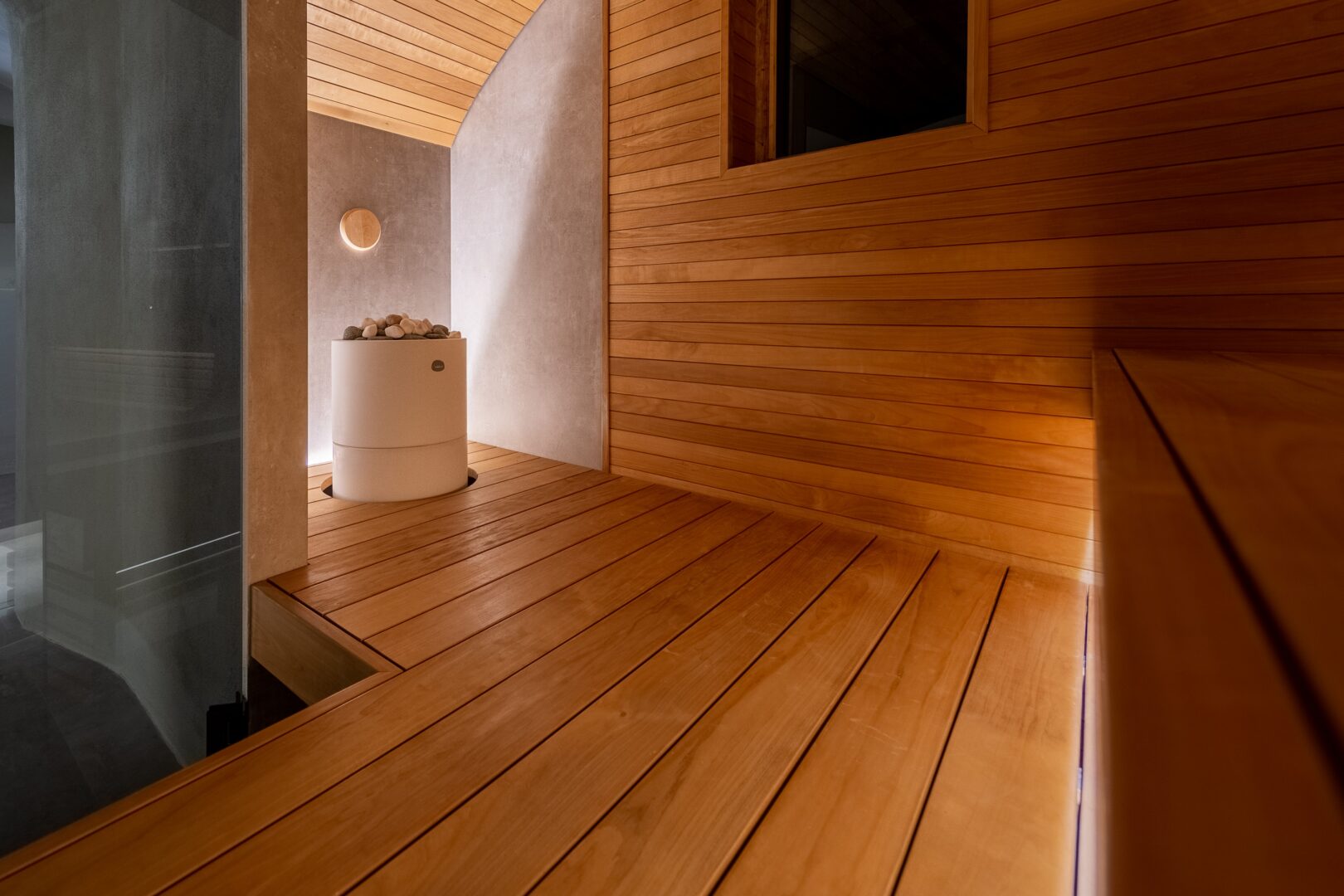
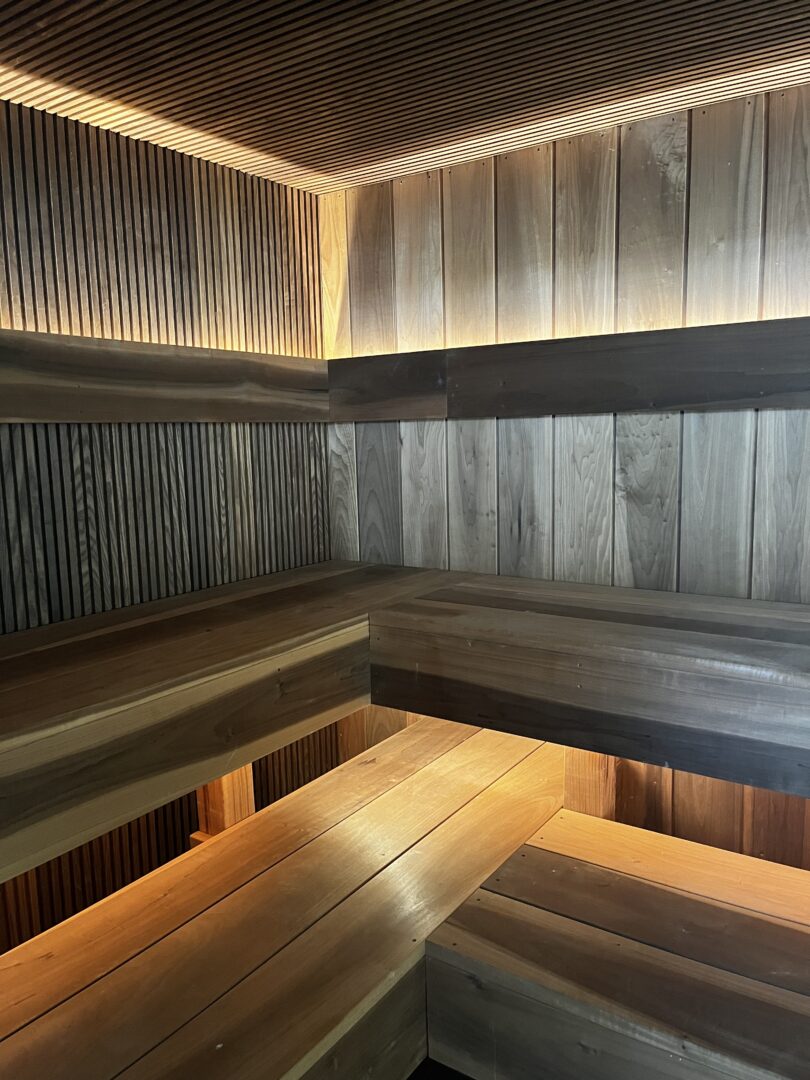
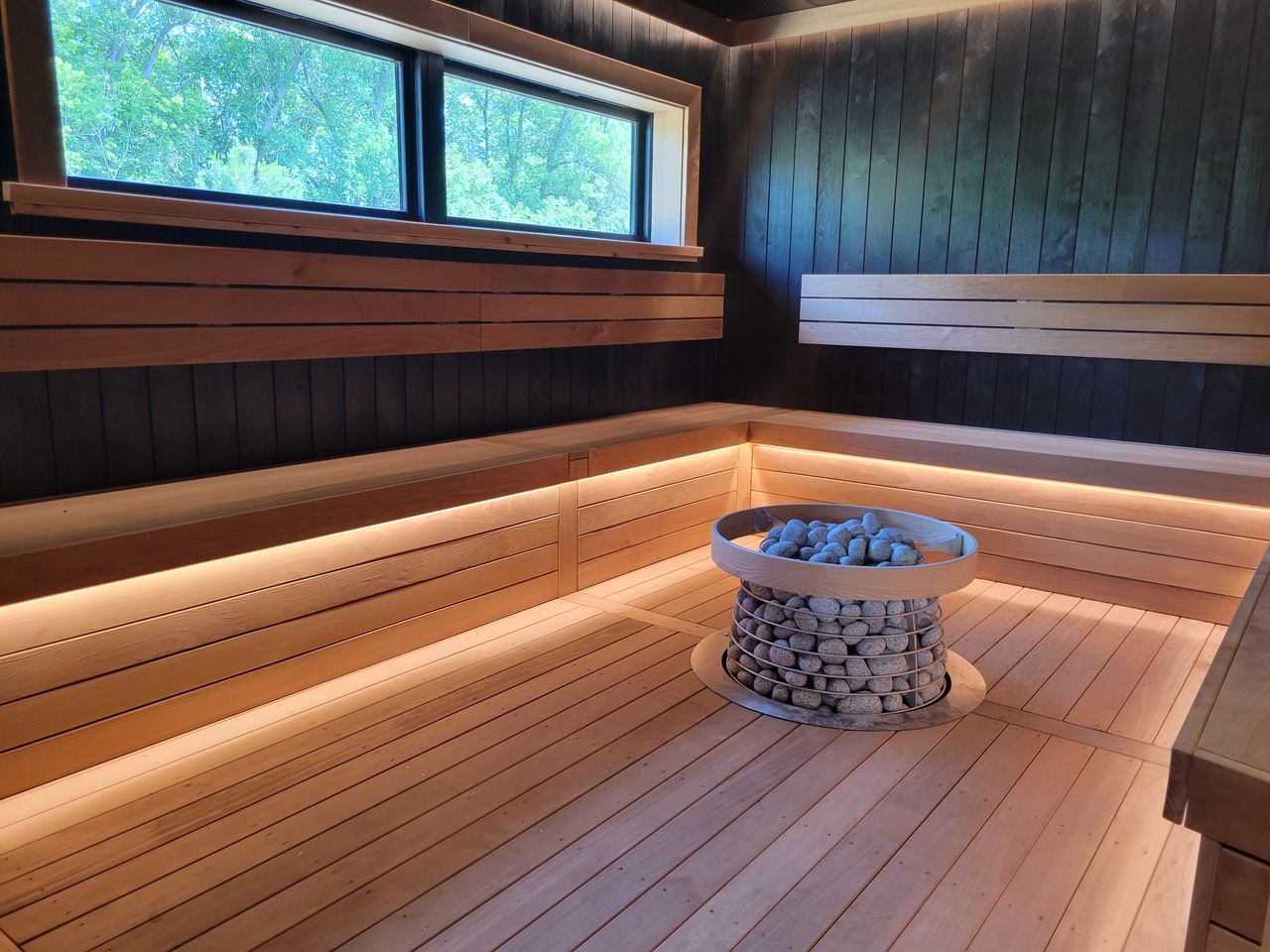
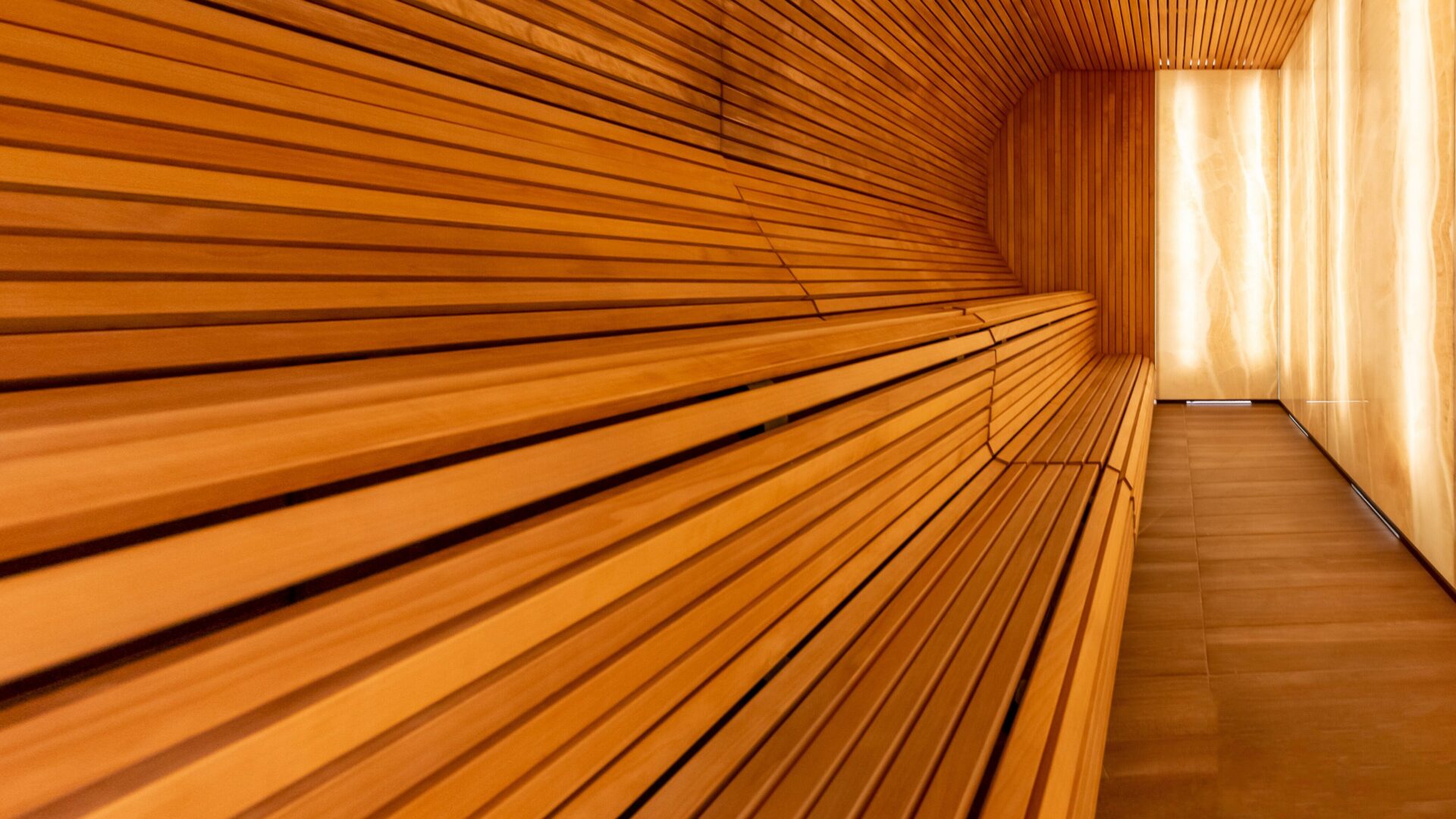
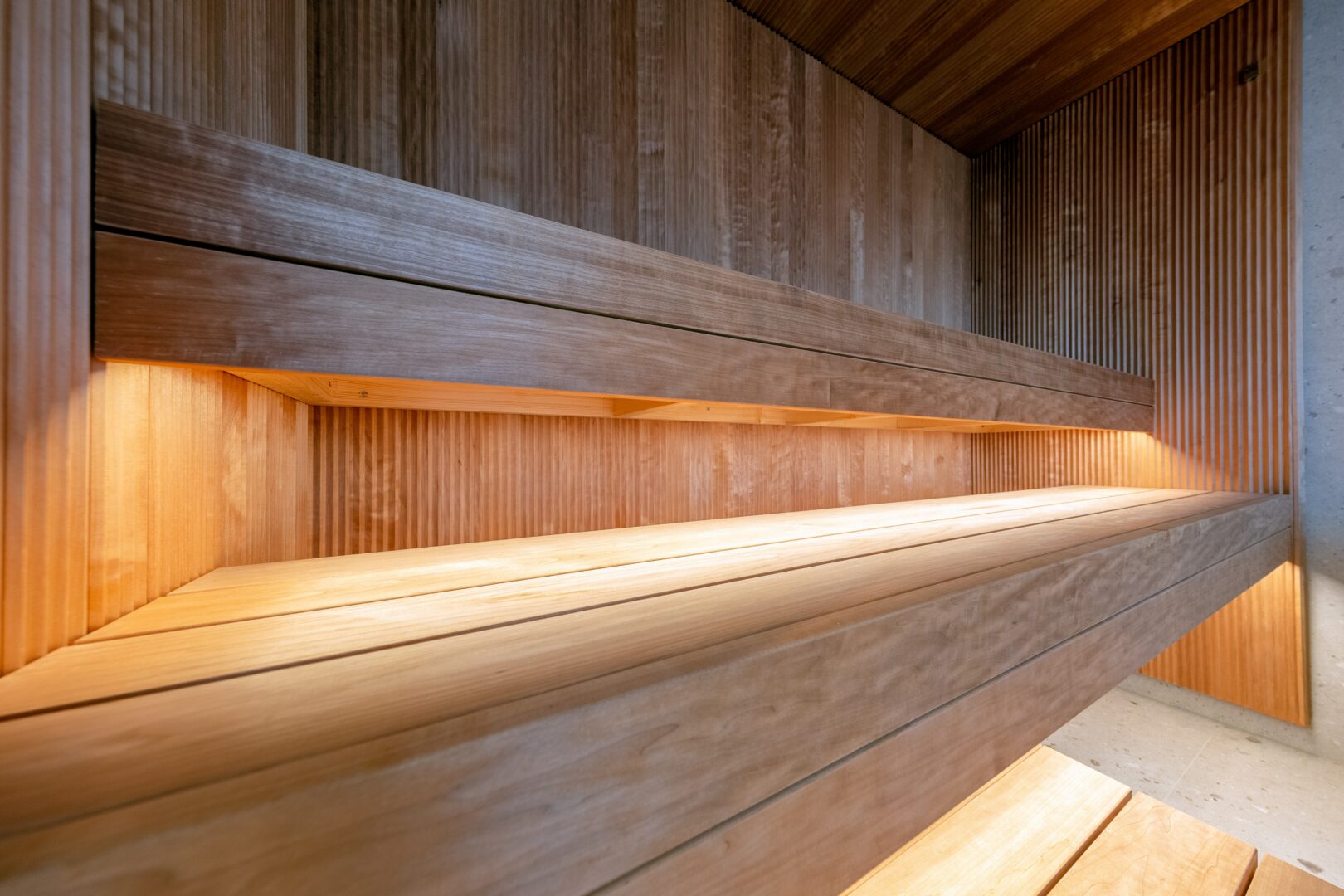
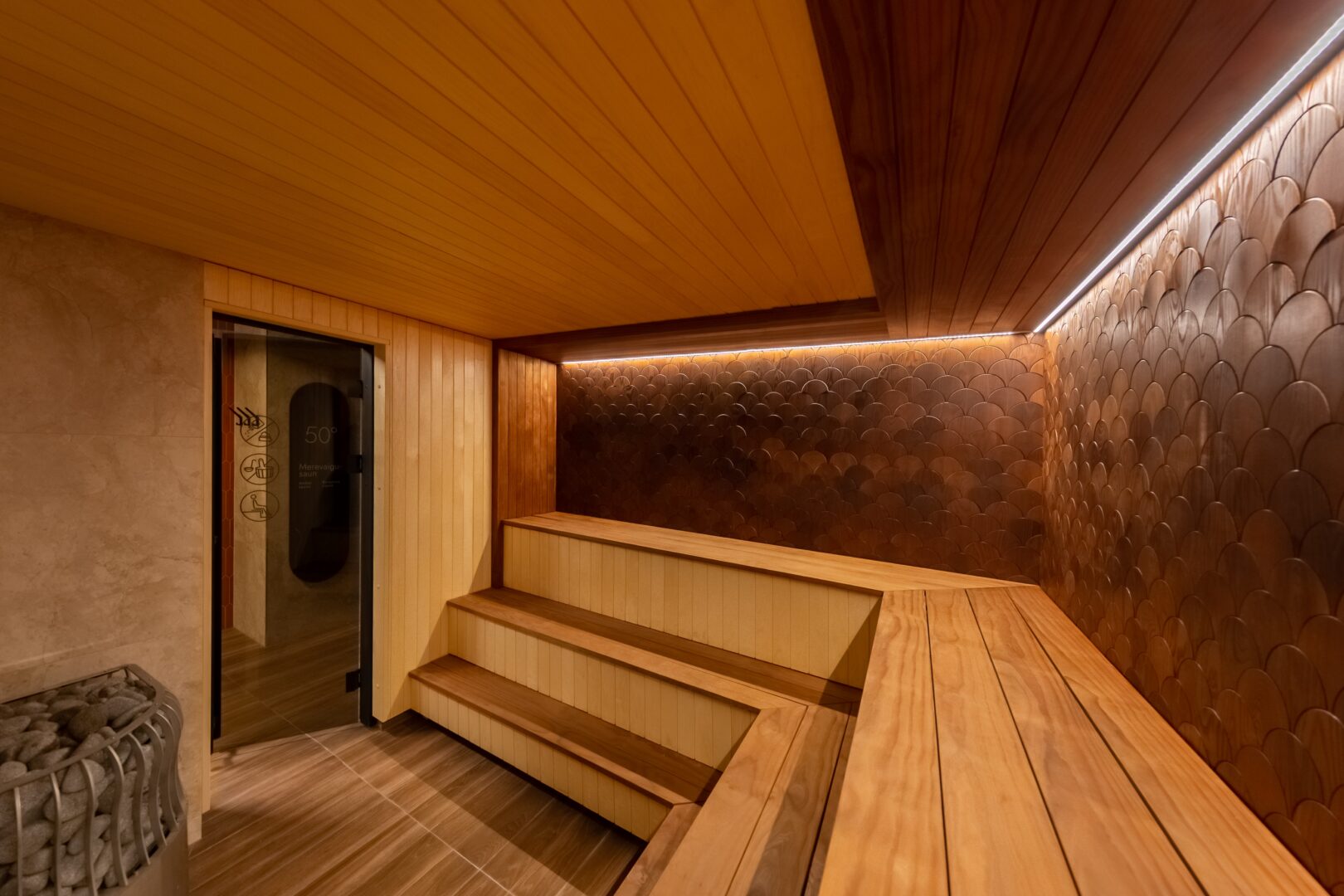
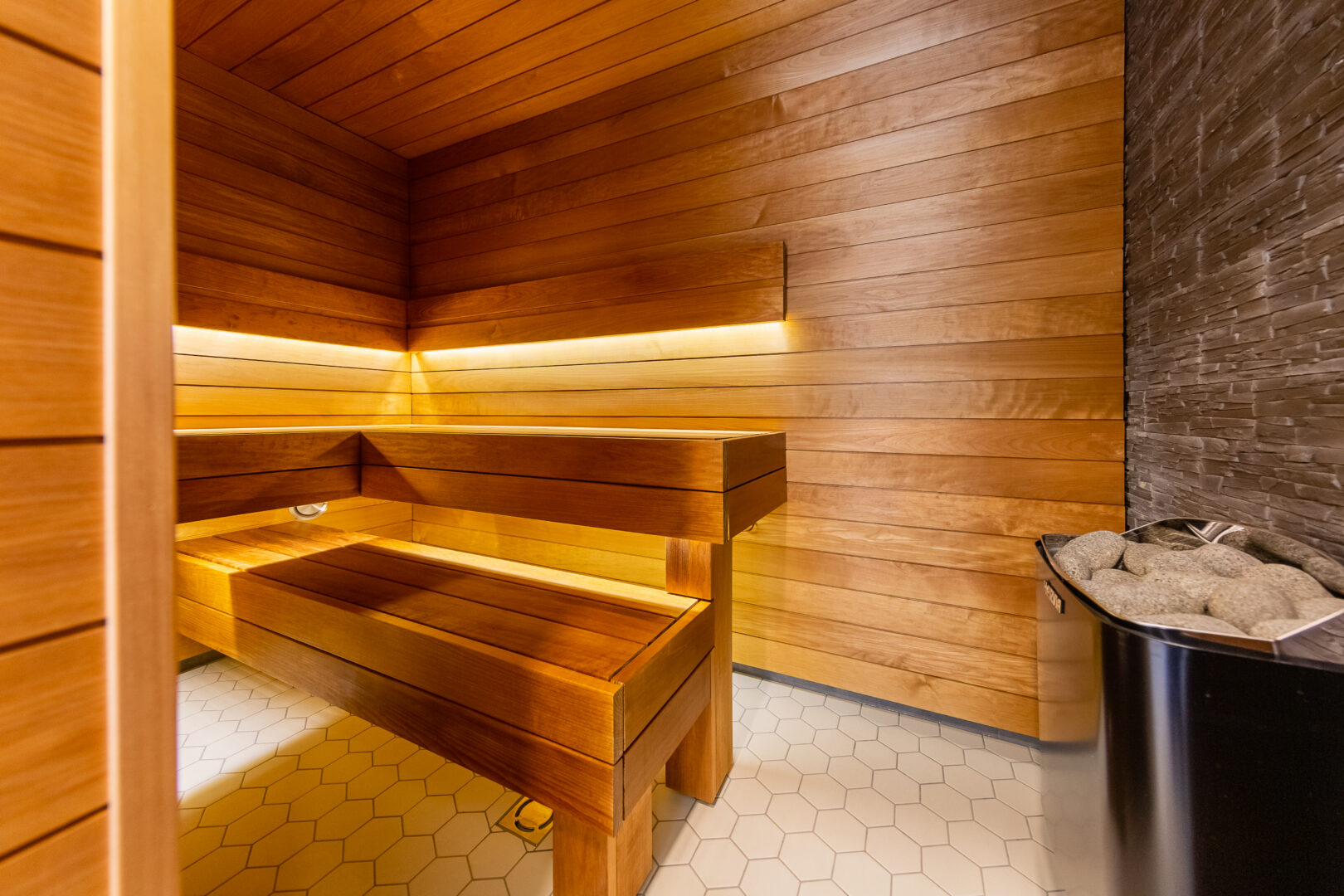
What makes these woods sauna-specific?
Thermory chooses Alder, Aspen, and Magnolia because, like WRC, they have natural sauna-ready properties, including a cool-to-the-touch feel, resin-free composition, moisture resistance, and proven durability in high heat conditions.
When it comes to a successful sauna session, it should come as no surprise that the comfort of the occupants should be one of the most important factors in your material choices. A common advantage of low-density materials like Alder, Aspen, and Magnolia is their low thermal conductivity. This means that as the sauna heats up, these materials will remain cool to the touch. Thermory takes this a step further with their special thermal modification process, which allows for even lower thermal conductivity, but we’ll get into that a little later.
Thermory’s Sauna materials are all resin-free; this means that the lumber itself has no sap. Because of this, when the wood heats up there will be no resin bleeding, unlike pine for example which can weep pitch at sauna operating temperatures that can burn the user’s skin. These pitch pockets can also be a point of failure where the wood will crack and splinter as the sap is baked out over repeated heating cycles.
These materials also share a diffuse-porous grain structure, which means that there are no large open pores or coarse grains for moisture and bacteria to get into. Let’s face it, we all sweat in the sauna, so what seeps into the wood is maybe not something you want to think too much about. Fine-grain structure means the wood does not retain any “smells”. Using these materials allows for much easier maintenance and increased hygiene for your sauna.
On top of these woods’ natural abilities, Thermory also specially modified them for sauna use. Most of Thermory’s products are “cooked” in a low oxygen, high heat environment that can reach up to 419° F, but the sauna species are heated to only 374°. The reason for the difference is because of color and intended use. These sauna species are meant for interior use only, so the full thermal modification treatment is not necessary. Rest assured, even at the lower temperature, the benefits of stability and durability are still present.
Finally, in a sauna environment, these materials are subjected to massive temperature swings, which can allow for rapid material movement. Because of Thermory’s modification process, the moisture content of the wood is ~5% as compared to 10-12% of standard kiln-dried lumber. The modified wood absorbs much less water, even at 100% humidity. Thermal modified wood maxes out at 12% moisture content. So even in the most dramatic humidity shifts the moisture content swing is extremely minimal.
Why not modify Western Red Cedar?
Okay, so you just read all the fantastic benefits that thermally modifying woods can have. So, if WRC is the go-to species, why not thermally modify it? The answer is a simple time investment. The increased performance is negligible when you consider that it performs well in an unmodified state. So the cost increase simply would not be worth it. But also recognize that not all wood species can be thermally modified. WRC’s naturally resinous nature actually causes a lot of problems in a thermal kiln, as those oils and resins are heated and removed from the wood, leaving it weaker and crumbling with an inconsistent texture.
For exterior use, and other options
If your dream sauna is its own building requiring exterior cladding, Thermory still has you covered. The aforementioned species are interior only applications and are not modified for exterior use. However, Thermory’s Benchmark products are more “intensely” modified and can be used for both interior and exterior use. This can further expand your choices to match any aesthetic.
Thermory Sauna Design & installation considerations
When installing Thermory’s sauna materials, you must understand that even though these products are thermally modified, and wood movement is significantly reduced, there WILL still be some movement, that is just how it is with natural organic materials. Thermory recommends the use of horizontal and /or vertical furring strips to allow air flow behind the paneling.
For specifics on installation, refer to Thermory’s sauna installation guide here
Choosing the right wood makes the sauna
You have many purpose-built materials for the construction of saunas, as the application itself is very taxing on its materials. But despite this, Thermory provides products that meet and exceed the requirements of this demanding application that balances comfort, performance, and durability. If all of this is still too confusing, you can always reach out to us for assistance using the link below or request a sample.





Leave a Reply