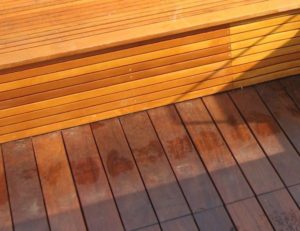
Spring time is here and with it comes deck building season. This is the time of year when our millwork department spends 75% of the day grooving Ipe decking boards for hidden fasteners. At any given moment there are several trucks being loaded with Ipe or Cumaru or Tigerwood decking to be shipped off to our customers around the country. As we have written about on this blog earlier, Ipe is really an unrivaled decking species, but the price continues to climb every year. So it is that this year we are paying very close attention to alternative decking to Ipe wood and we thought now would be a good time to discuss the options out on the market.
There are many excellent tropical decking species that all look and perform differently so how do you choose the right one??
Cumaru vs Ipe: The Heavy Hitters
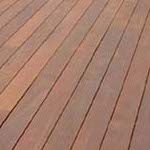
Ipe: No matter how you look at it, Ipe is the number one option for decking. It is truly a magic wood that remains stable and strong in every environment. For exterior uses, Ipe does not have to be dried so the turn around time from forest to your job site is much less. Usually when we receive Ipe wood from our mills it is stable around 12-15% moisture content. As one of the hardest woods in the world, durability is never in question. Since Ipe is the premium decking wood it can be found in many applications from boardwalks to private residences. The superior performance and high demand of course come at a higher price point.
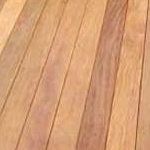
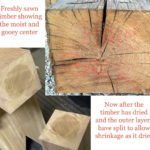
Cumaru: This species is only slightly softer than Ipe and is often known as Brazilian Teak. There are two variants in circulation: yellow and red Cumaru. The red variant is the more common for decking purposes. Cumaru does have some stability issues and is prone to shrinkage so careful kiln drying is a must to produce a good decking product. Using Cumaru in a dry climate for decking can be slightly risky because of these shrinkage issues. The red brown color is similar to Ipe so paired with high density and hardness, Cumaru makes a good alternative. It is readily available and about 2/3 the price.
Ipe Alternatives
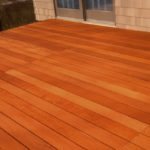
Red Balau: This species substantially easier on the tools than some of its other tropical brethren. Balau is in the Shorea genus which is explains its similarity to Mahogany in workability, texture, and color. It is quite hard and durable (harder than domestic Hard Maple) and much more color consistent and defect free than some of the other tropical decking species. Moreover it is about 1/2 the price of Ipe. This makes is a real star in the tropical decking world, but it isn’t as widespread as Ipe and Cumaru and make be harder to source from a local dealer.
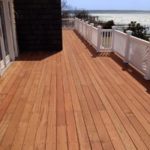
Jatoba: You may already know this species and possibly have it in your home as interior flooring. The flooring industry calls it “Brazilian Cherry”. It is an exceptional interior floor option since it is extremely hard (close to Ipe). But as a tropical wood it is rot and insect resistance and quite stable. The beautiful red color actually deepens over time and sunlight exposure and choosing Jatoba is a great way to seamlessly blend your interior floor to your exterior deck.
Tigerwood Decking and Others
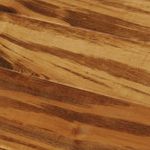
Tigerwood: Also known as Goncalo Alves this decking wood is most known for the brownish orange background and dark stripes giving it the tiger appearance. Over time it will darken to a deeper reddish brown. The wood dries well and is very stable in many climates, but kiln drying is required to achieve this stability. Tigerwood decking is used extensively for decking but also a lot in interior applications. While readily available, the variegated “striping” can make assembling a deck with consistent appearance difficult. The biggest issues with the stripes in Tigerwood decking is that they are not even at all. One board may have no striping at all while another is heavily striped. Across and entire deckIn our experience, the smooth texture while great feeling on bare feet can be slippery.
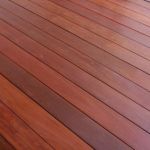
Massaranduba: Also known as Brazilian Redwood or Bullet Wood, Massaranduba is a very dense and hard wood. The tree is quite large and it yields nice straight and consistent grained boards perfect for decking. It is deep red in color and can mellow with more brown upon exposure. Massaranduba is about 20% less hard than Ipe but still very durable. Drying is the weak point of this species and splits and checks are very common during drying. Moreover, when used in dry climates like the Rockies and the Southwest, Massaranduba can all but break apart. This species is very popular in Europe due to their wetter climate as it is quite stable under these conditions. Careful climate consideration should be taken when building a deck from Massaranduba. Similar to Cumaru in price and easily available, this species can be a great alternative in selective climates.
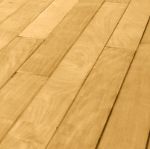
Garapa: Also known as Brazilian Oak, Garapa is another dense and hard decking species. It is unique in that is has a lemon yellow color and creates a striking appearance. Feedback from our customers tells us that while this is a stable and effective decking product, the color is tough to swallow for many homeowners. The hardness is about 40% less than Ipe, but still much harder than many domestics species so it is durable and carries the same class A fire ratings of many of the South American decking species. Many overcome the color issue by applying stains and dyes to make Garapa look more like Ipe.
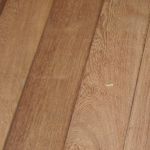
Cambara: Often sold as a variant of Mahogany, Cambara does have many similar properties such as an open grain and reddish brown coloring. Honestly this is not a viable decking option anymore as its availability from Brazil isn’t consistent and grade is just as inconsistent. I only mention it here as many people still cite it as a possibility and while this may have been true a few years ago, this is not the case any longer.
Best Wood for Decks
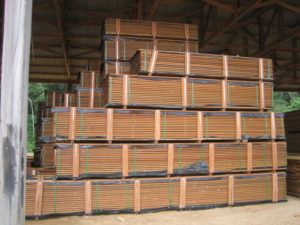
J. Gibson McIlvain specializes in Ipe and it is far and away our most popular decking product. We also carry a large stock of Cumaru, Jatoba, and Red Balau in all the common sizes. Our Tigerwood Decking is stocked in much smaller quantities but still available on request. We do recognize that these other options mentioned above are viable species and can supply them to our customers upon request. In the decades we have been supplying decking products, Ipe continues to out perform all others so we continue to make this our flagship offering. But as prices climb on Ipe we have begun to take a stronger stocking position in our alternative species and our customers report great results with the alternative species. Beyond the tropical decking species we normally stock, there are some really exciting options in the modified wood market. One in particular that we like is Thermally Modified Ash for decking. This offers a domestic species that through a specialized kiln drying process modifies a normally interior species into a super exterior species that is dimensionally stable too.
We can supply whatever you decide for your deck. Essentially, if our customers demand a decking species we will have it available for you. However, we have chosen the species we carry for a reason and you may find that we will try to convince you to use one of them over some of the others listed in this article. But in the end, there are so many variables at play when building a deck and your personal situation will be different from anyone else. So let us help you choose the right tropical decking species for your project.
Learn more about the lumber industry:

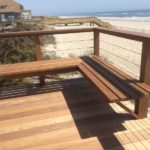
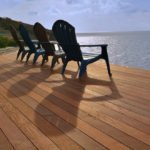


We have a cottage along the ocean and want to build a deck, what type of wood would be best, would IPE be a good one.?
Yes Ipe would probably be the best choice. But really any of these species would do a good job. It depends on the look you want. I would not however be fooled by maintenance free statements unless you do want your deck to weather to a gray color. Any of these species would benefit from an annual oiling to maintain the color.