 OK I admit maybe the title of this post is a bit much but there has been a lot written on this blog in the past about finding good alternatives for difficult to obtain and expensive species. Mahogany is often the subject of this search. Since being listed as a CITES protected species, Mahogany availability and price has become an issue. Additionally, the reputation (whether true or not) of Mahogany has suffered and is now seen as “endangered” and “unsustainable”. An entire African market has emerged to fill the void and offers Sapele, Utile, and African Mahogany (Khaya). These are great exterior woods but are heavier, denser, harder, and more difficult to work than Genuine Mahogany. In an effort to find a good alternative with similar working properties, a newer market for Spanish Cedar (Cedrela odorata) has exploded and this species is even more popular due to the lighter yet very strong properties. Spanish Cedar is no longer just for the humidor makers but is now in widespread use in doors, windows, exterior trim, and even luthiers. Now the Spanish Cedar market is tightening and availability is a concern. As prices rise and delivery times become suspect, buyers start looking for an alternate to the alternate. Ironically we believe the best solution to this comes in the form of plantation grown Genuine Mahogany from the Fiji Islands.
Normally J. Gibson McIlvain stays clear of plantation species. Our customers require very high quality lumber and plantation grown wood often has a lot of inconsistency in color and density. Because of the way plantation trees are grown a greater number of defects like pin knots are common. Differences in soil composition results in difference in characteristics of the lumber and because of this the “genuine” species like Mahogany and Teak will always be in higher demand.
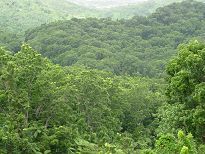 Shortly after World War II, The British began planting Genuine Mahogany (Swietenia macrophylla) in plantations. Over the last 60 years the plantation owners have been shocked with how fast the stock grows and more importantly how aggressive the natural replanting spread is. Today there are 3 and even 4 generations of Mahogany trees growing in Fijian plantations that are very healthy and managed in a sustainable way. These plantations are firm believers in low impact forestry and strategic thinning to produce strong primary stock. Strict replanting guidelines are in place but more often than not are not necessary because of Mahogany’s penchant for spreading.
The impact of all of this is the beginning of a proper forest with a self sustaining ecosystem. Proper management of the forest will allow for plenty of supply for years to come with strong optimism that there will be an even greater supply in another 50 years than there is now.
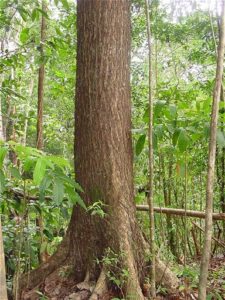
From our perspective as a buyer of top quality Mahogany we consider these to be more traditional forests than plantations where sun drenched trees grow quickly and branch often producing wide growth rings and low density as well as substantial pin knots and color bleaching. This Fijian growth has many of the characteristics of older growth forests and each generation gets better and better. With a similar climate in Fiji to Genuine Mahogany’s natural home in South America and the Caribbean region we can continue to expect a truly Genuine Mahogany that will only get better.
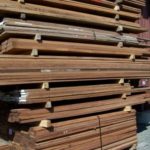
So back to my original point. This Fijian Mahogany is not on CITES appendices because it is not at all endangered. This means much of the import delays and cost hikes are not applicable and for now the availability is very strong. Pricing remains steady and is about equal to Spanish Cedar but we expect it to fall below Spanish Cedar prices. It is still cheaper than South American Mahogany because it is plantation grown. What is most important is the better working properties (this is Genuine Mahogany after all) and the consistency in color and availability make it a very strong proposition.
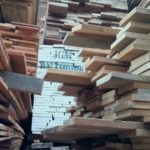
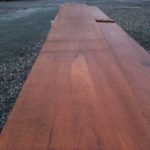
We have some Fijian Mahogany in stock and more on the way and we are very excited to have a new sustainable source for this outstanding wood. It will be interesting to see if the original species ends up being the best solution for the alternate to that original after all.




How are you able to acquire Mahogany from Fiji. I have been told the Government owns and controls all the Mahogany in Fiji.
I have also been told that Mahogany can be purchased from Private Plantation Owners.
Can you offer me any clarity on what I have been told?
ML Eslick
Las Vegas, Nevada USA
Based on our last visit to Fiji the answer to your question is both. One can buy material from the government or from a private land owner. What you have to consider is the quality you are getting. In many cases the private owner may have not maintained that forest like a managed government plantation. It is time consuming and very expensive to do so. This is not to say that good lumber cannot be found through private sources, but the percentage of lesser quality logs is on the rise as this new market develops and many players try to get involved.
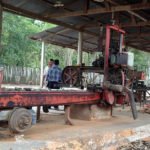
Your right, there privately owned forest and also those planted by Ministry of Forestry. I am logging from privately owned mahogany forest and buying logs from Government stocks.
Thanks
please describe the pros/cons of using Spanish cedar compared to a mahogany for a custom front door in New Jersey USA.
Also discuss the above if the door is an engineered rail with pine interior/Spanish cedar exterior or mahogany interior and Spanish cedar exterior .
Doug you are going to find very little actual difference in workability and stability between Spanish Cedar and Mahogany. The pros and cons will weight mostly on availability and budget. Spanish Cedar and Genuine Mahogany have both risen in price and are becoming harder to get in consistent grades and width/lengths. In most cases this is not due to deforestation but regulation and economics. Regulation is doing its job and limiting the export for conservation reasons. Economics drives it because sawmills can’t make any money with Spanish Cedar so don’t bother to cut it in the first place.
Regarding you second query there are a lot of variables I don’t know about here but you will most likely have a more stable rail with the Spanish Cedar and Mahogany combo because the properties are so similar. However depending on the thickness of the face veneers the stability will lie entirely with the core species and in that case you will find Mahogany outperforms Pine. But you will pay for that premium.