Deck & dock builders
Best Wood for Decking
In the commercial and residential decking market today, there are many options for long lasting, low maintenance, and attractive lumber. J. Gibson McIlvain focuses on the high end decks, docks, rainscreen siding, and ceilings that are synonymous with tropical hardwood decking.
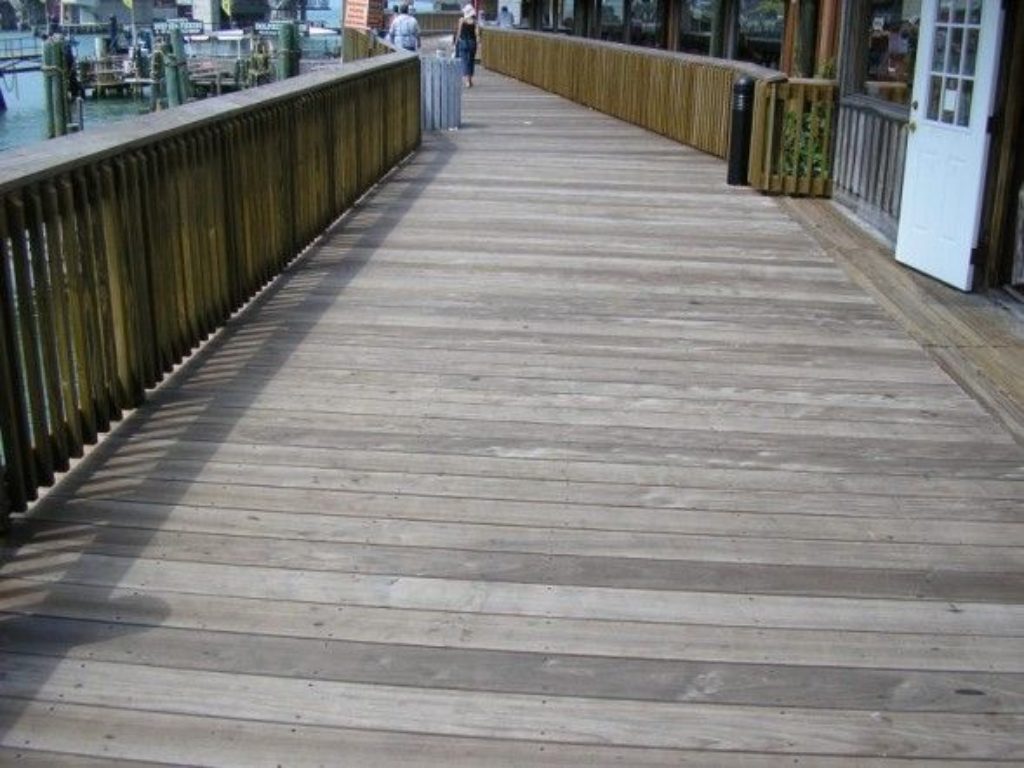
Our experience has proven to us that nothing can beat the durability and beauty of a tropical hardwood deck. Composite products have proven over the last 20-30 years that they do not boast the same beauty or durability as hardwoods like Ipe, Cumaru, Teak, or Jatoba.
Additionally, with more public awareness of sustainability issues, the public would be glad to know that tropical hardwood decking is one of the “greenest” options available today. We specialize in Ipe, Cumaru, Teak, and Jatoba decking, but we can source and offer additional species upon request.
J. Gibson McIlvain has built long-standing relationships with mills in South America and Southeast Asia to ensure we always have quality lumber in stock. We also aim to stock FSC® lumber whenever possible.
Tropical Hardwood Decking
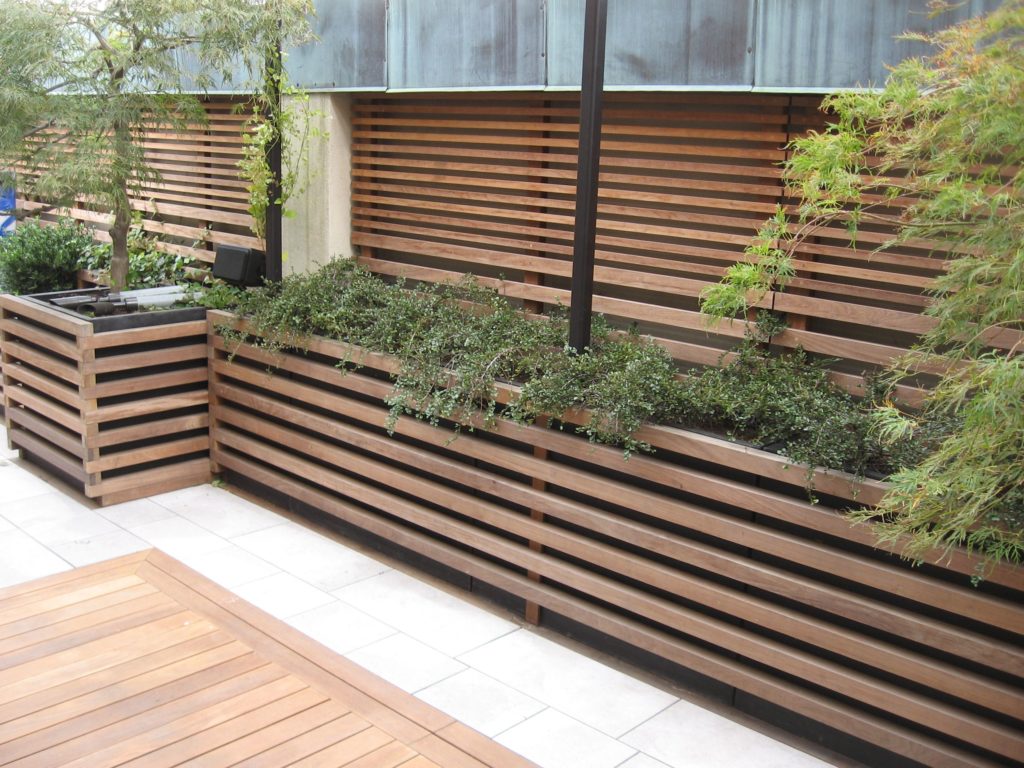
Ipe is the undisputed decking hardwood of choice. The density, extreme stability, and resistance to rot and decay make this species perfect for decks of all shapes and sizes.
In fact, Ipe is so dense that it actually has a class A fire rating. Once installed, Ipe has been shown to have a 40+ year lifespan. It can be left to weather to a silvery hue, or with periodic treatment of timber oils, it can keep its rich reddish brown luster.
As the costs of Ipe continue to rise, J. Gibson McIlvain continues to search for alternatives at lower costs. It is hard to beat the characteristics of Ipe, but we have found with extensive experimentation that Cumaru is a solid alternative.
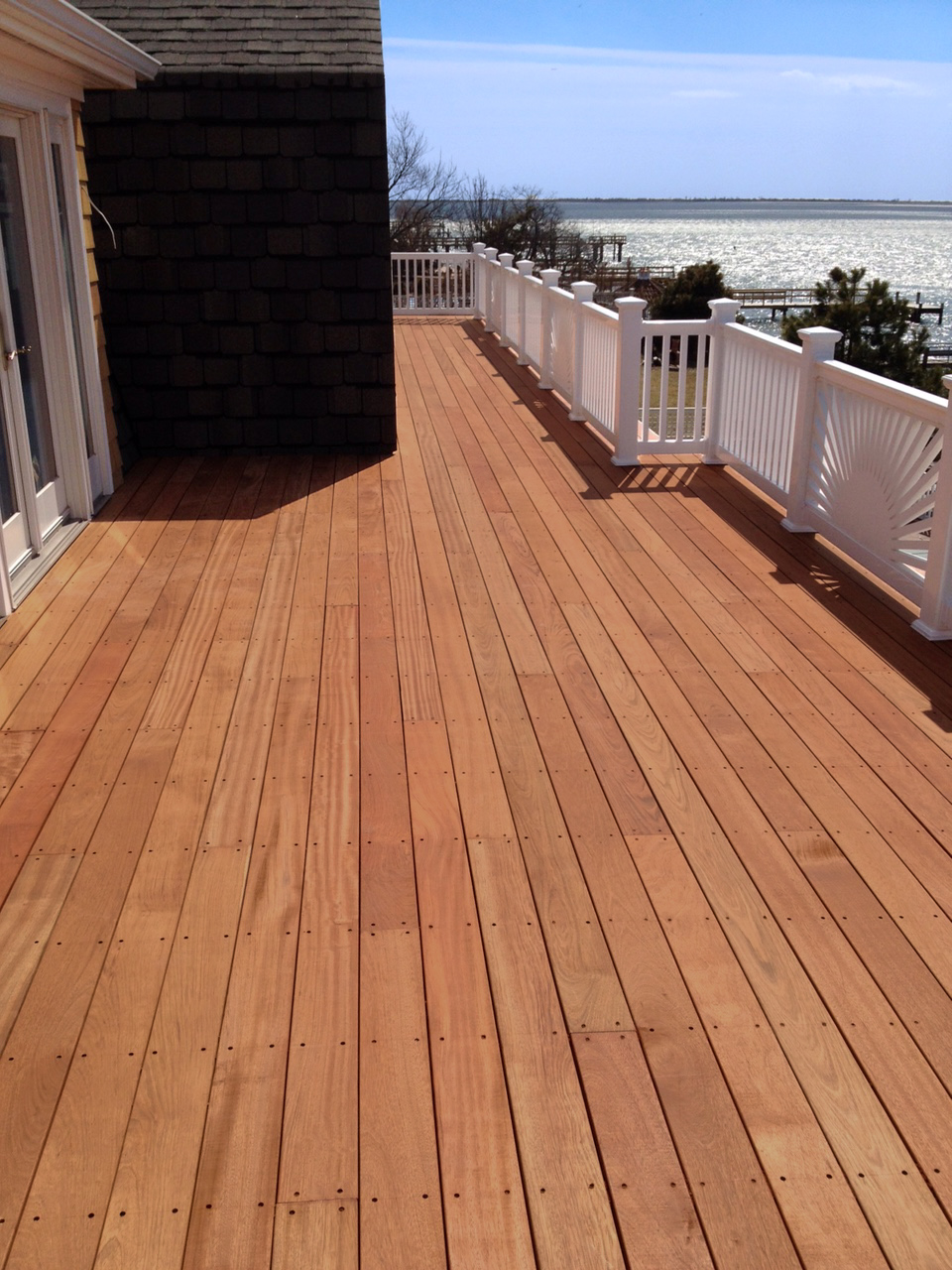
While not quite as stable as Ipe, when dried properly and allowed time for acclimatization, Cumaru will not move or check much at all. Because of this lesser stability, we only stock 5/4 thickness at J. Gibson McIlvain, and this controls the movement of the wood.
Cumaru can be found in brown or yellow variants, depending on the color of your choice. Like Ipe, it is very dense and hard, and it also shares the same decay and rot resistance.
We recognize a growing trend for good decking alternatives to Ipe and feel that Cumaru offers the best opportunity for a lower cost without much compromise in terms of quality and durability.
Red Balau presents yet another opportunity for a lower cost yet outstanding performance tropical decking species. Much less known in the U.S. but widely used around the world, this is a newer product on the scene at least for decking purposes. In fact Balau has been used in a variety of other construction tasks for decades.
Red Balau also has the added benefit of being significantly easier to install than Ipe, because it is not nearly as tough on drills due to being about half as dense and half as hard as Ipe. While this reduced Janka hardness could be viewed as a detractor, the fact is that 1600 psi for Balau is still significantly harder than most domestically available exterior woods.
Jatoba is another decking species which we love. The wood has gained a strong following in the interior flooring market under the trade name Brazilian Cherry.
Jatoba is another highly dense wood with a deep red color and high hardness. Even better with today’s design trends of blending indoor and outdoor spaces, one can seamlessly blend their interior floor with their deck by using Jatoba flooring & decking. Jatoba is a widely available species for decking, and it will often be a bit cheaper than Ipe too.
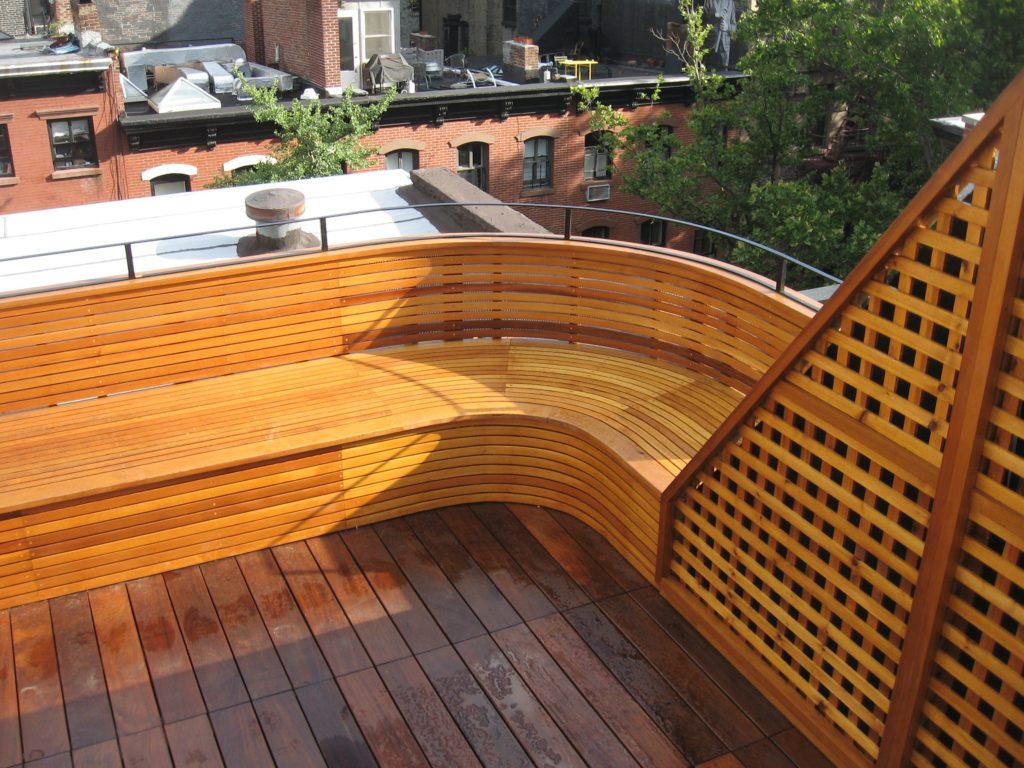
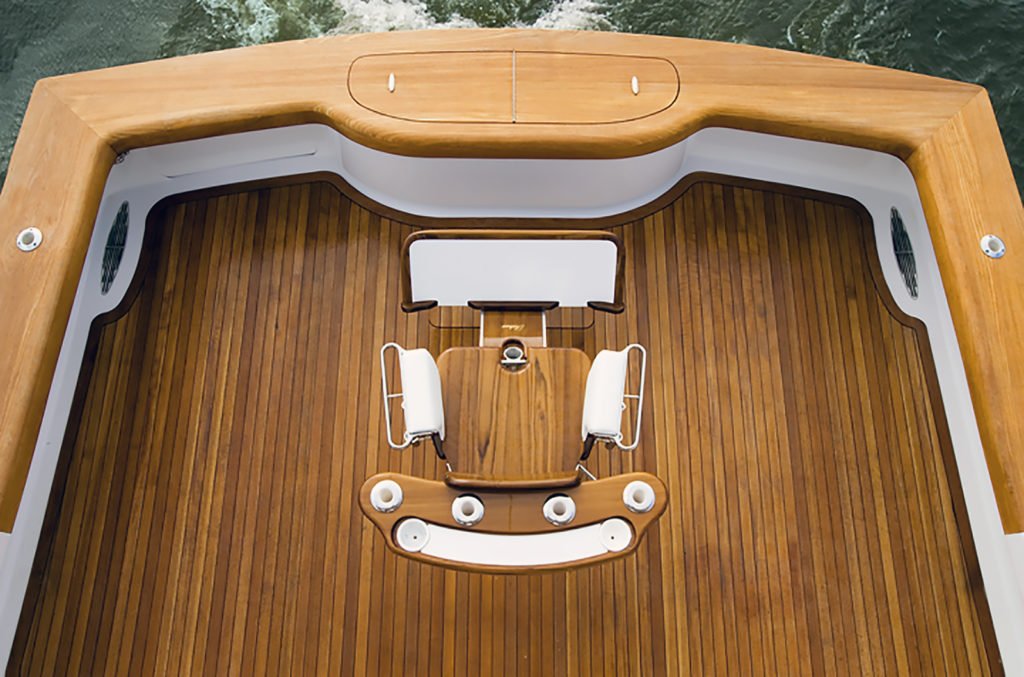
The Teak lumber we sell is usually requested by the boat building industry, and we maintain a massive inventory as one of the largest importers of Teak lumber in the country. Although the wood is traditionally used in boat building, it has found another market in private homes. High end decks and interior flooring and trim look simply beautiful in Teak. The practically indestructible nature of Teak makes it an excellent decking product.
Tropical Decking isn’t Just for Decks Either
Our staff is highly experienced and knows a great deal about decking materials and how they will behave in different climates and environments as well as in different applications. Today, a lot of tropical decking species are climbing the walls as rainscreen siding or even higher as T&G ceilings. You’ll find tropical wood appearing in inside feature walls or even inside-to-outside features, where these outstanding exterior species are highlighted and tying together indoor and outdoor spaces. We are happy to help you decide which species is right for your job, and we can ship your selection to anywhere in the United States.