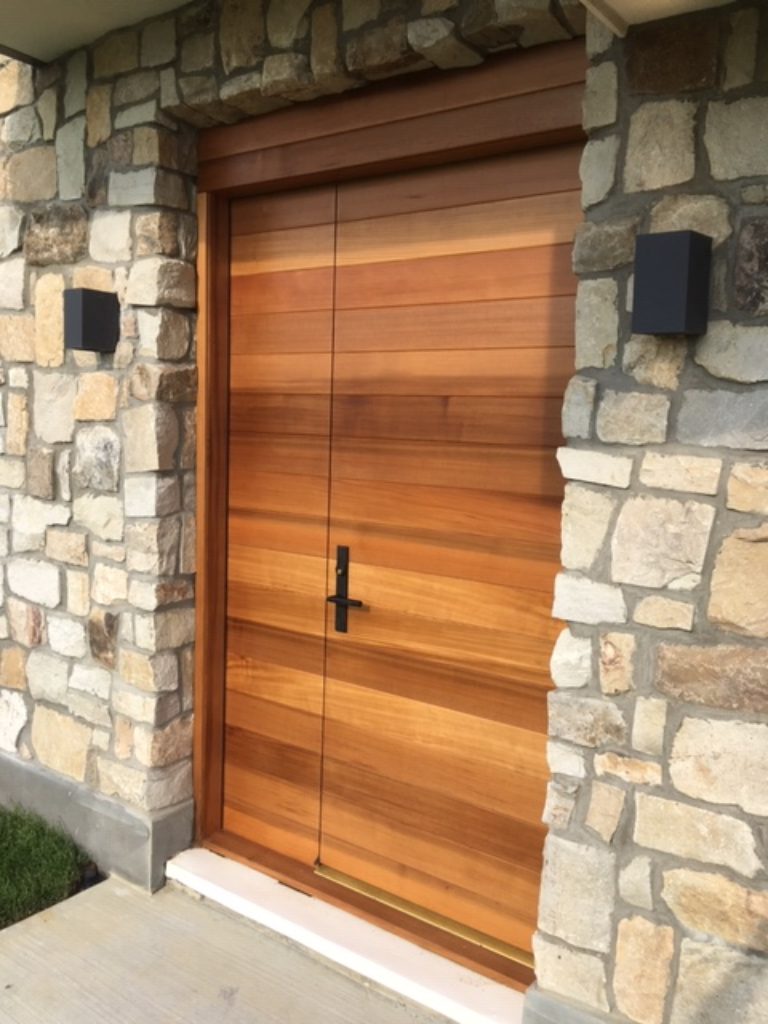
Door and window manufacturers have several obstacles to overcome in their day to day operations. Their products must be made to exact standards to fit within little-tolerance-for-error areas like a window or door jamb. Their products face heavy use and usually need to withstand exterior weather conditions.
It is no surprise then that this industry applies high standards to the lumber and plywood they buy to make theirs doors and windows. The unifying element is stability. Whether a solid wood product or a plywood panel, the material must have little to no movement or at least a predictable movement during each season’s weather. Even if the door is purely an interior door, it will be subject to the seasonal movement that comes with air conditioned and heated homes. If the lumber is not stable, then the door and window manufacturers will not use it.
To gain some control over this ever moving medium, many manufacturers utilize plywood for door panels and even door rails and stiles that are wrapped in veneer. Many of our customers find that this is convenient and that it provides a great cost savings. We at J. Gibson McIlvain can provide not only the specifically selected solid wood lumber, but also the plywood needed to complete the entire project.
J. Gibson McIlvain intimately understands the issues facing door and window manufacturers. We understand wood and how it reacts to the elements. We understand how to properly dry each species to achieve maximum stability. We understand how different grain patterns like quarter, rift, and flat sawn will effect that stability. Whenever possible, our staff will separate the different sawing patterns as the lumber comes into the yard, so we can set aside popular species for the door and window industry.
For interior applications, anything goes as far as species. In today’s climate controlled homes, a properly dried wood will stay within the tight tolerances to prevent a door from sticking. For external applications, the favorite species are Sapele, Spanish Cedar, Genuine Mahogany, African Mahogany, Utile, and even Teak. Which species is best for your project will depend on both how the door or window is intended to be used and how it is desired to look.
Our door and window customers are the experts in their field, and, because they are familiar with working with such strict tolerances, they usually know exactly what they want for a project. When they call us, the orders are quite specific, and, because we have been preparing for orders from window and door manufacturers since the lumber first entered our yard, we are able quickly assess our inventory, pick the lumber for the order, and provide a price.
Our skilled staff can also help you determine the best way to group your order to save on shipping costs and ensure that you receive the best quality product to meet the strict standards that are common place in the window and door industry.